

12 Best Things to Do in Montpellier, France (2026 Guide)
Last Updated on September 25, 2026 by April Nicole
Is Montpellier one of the most underrated cities in the South of France? With its lively café terraces, historic squares, winding streets, impressive architecture, and easy access to the Mediterranean coast, Montpellier offers a refreshing alternative to some of Southern France’s more crowded destinations.
Located in the Occitanie region, Montpellier combines centuries of history with a youthful, modern atmosphere. You can wander through the pedestrian streets of the Écusson, admire masterpieces at the Musée Fabre, enjoy panoramic views from the Promenade du Peyrou, explore the city’s contemporary neighborhoods, or take a day trip to nearby beaches and coastal towns.
After living in France and exploring different parts of the country, I believe Montpellier deserves far more attention than it receives. It is especially appealing for travelers who enjoy history, food, art, wine, and destinations that are easy to explore without a car.
In this guide, I’m sharing 12 of the best things to do in Montpellier, along with practical transportation tips, local food recommendations, day-trip ideas, and a realistic three-day itinerary. Whether you are visiting for a weekend or using Montpellier as a base for exploring the Languedoc region, this guide will help you plan your trip with accurate, up-to-date information.
📌 Psst! This blog post contains affiliate links, which means I may earn a small commission if you book through them—at no extra cost to you! Merci! For full details, check out my Disclosure Policy.
Planning a Trip to Montpellier?
These are my top resources for booking your Montpellier trip:
🏨 Where to stay: Compare hotels in central Montpellier for accommodations near Place de la Comédie and the historic center.
🚶 Best introduction to the city: Book a guided walking tour of Montpellier’s historic center to discover the medieval streets, private mansions, and hidden courtyards of Écusson.
🍷 Best experience outside the city: Explore the Pic Saint-Loup wine region on a guided tour with transportation from Montpellier.
🚐 Best for exploring farther afield: Browse day trips from Montpellier to discover Languedoc villages, wineries, lakes, and historic sites without renting a car.
If you are in a hurry, here’s a summary of what to do in Montpellier:
How to Get to Montpellier
Montpellier is easy to reach by plane, high-speed train, bus, or car. The best option depends on where you’re traveling from and whether you plan to explore the surrounding Languedoc region.
By Plane
Montpellier-Méditerranée Airport (MPL) is approximately 8 kilometers (5 miles) from the city center. LiO airport shuttle 620 takes about 25 minutes to reach Place de l’Europe, where you can connect to the tram.
The shuttle currently costs €2, or €3 for a combined shuttle-and-tram ticket. Taxis and app-based ride services are also available.
By Train
Direct TGV INOUI trains connect Paris Gare de Lyon with Montpellier in as little as 3 hours and 15 minutes.
Montpellier has two main train stations:
- Montpellier Saint-Roch: Located in the city center near Place de la Comédie.
- Montpellier Sud de France: Located outside the historic center and connected to central Montpellier by Tram Line 1.
Trains also connect Montpellier with Marseille, Lyon, Toulouse, Nîmes, and Barcelona. The fastest direct trains to Barcelona take approximately 3 hours and 15 minutes.
You can compare train schedules and fares from Paris to Montpellier before choosing your departure time.
By Bus
FlixBus and BlaBlaCar Bus connect Montpellier with destinations throughout France and Europe. Buses are often cheaper than trains, but journeys take longer.
Arrival points vary, so check the exact Montpellier stop listed on your ticket.
By Car
Driving can be useful if you plan to explore nearby vineyards, villages, or beaches. Paris is approximately seven to eight hours away, Marseille is about two hours away, and Barcelona is roughly three and a half to four hours away.
You do not need a car to explore central Montpellier. If you drive, consider using a park-and-ride facility and taking the tram into the city.
You can compare rental-car prices through Get Rent a Car or Discover Cars.
💡 Pro Tip: Save the map to your Google account to easily access it on the go during your trip!
Getting Around Montpellier
Central Montpellier is compact and easy to explore on foot. Much of the Écusson, including the area around Place de la Comédie, is pedestrian-friendly, and many of the city’s main attractions are within walking distance of one another.
For longer journeys, Montpellier has five colorfully designed tram lines connecting the historic center with neighborhoods, train stations, and attractions throughout the metropolitan area. A standard TaM ticket currently costs €1.90 and allows unlimited travel on the bus and tram network for 90 minutes.
Public transportation is free for residents of Montpellier Méditerranée Métropole who have an eligible Free Pass, but visitors must purchase a ticket. You can buy tickets through the TaM app or at available ticket machines.
Biking is another convenient option. Montpellier has bike lanes, riverside routes, and the Vélomagg bike-rental service. However, you will not need a bike or car for most sightseeing within the historic center.
Travel tip: Download the TaM app before your trip to check current routes, service updates, and ticket prices.
Best Things to Do in Montpellier
From historic landmarks and celebrated museums to colorful neighborhoods and regional food, Montpellier offers plenty to experience during a weekend getaway. Here are 12 of the best things to do in Montpellier for first-time visitors.
1. Explore Place de la Comédie
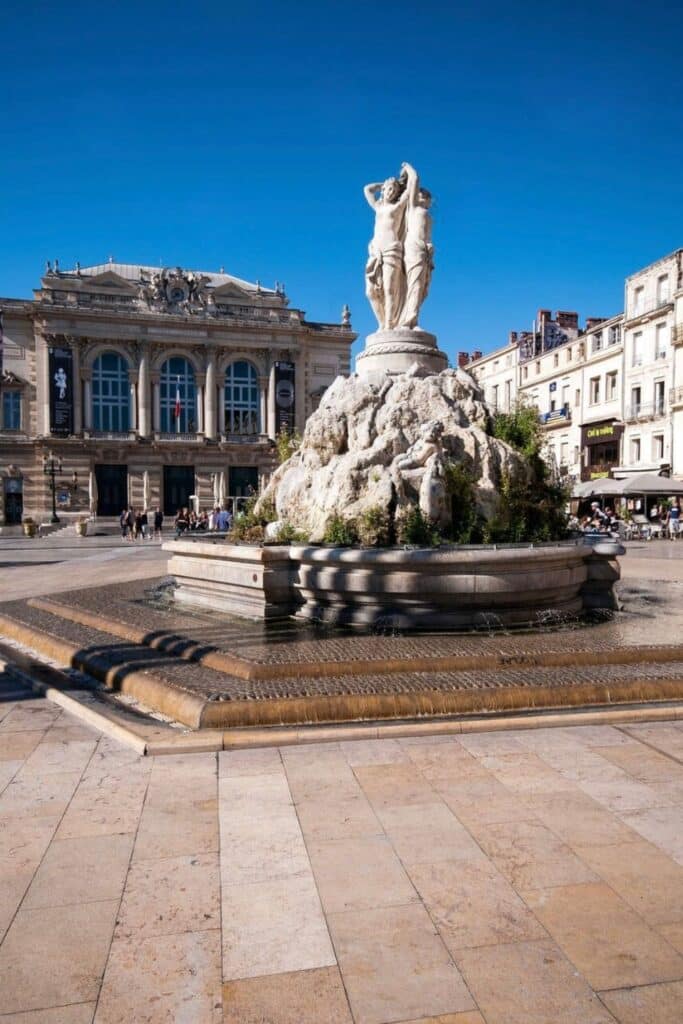
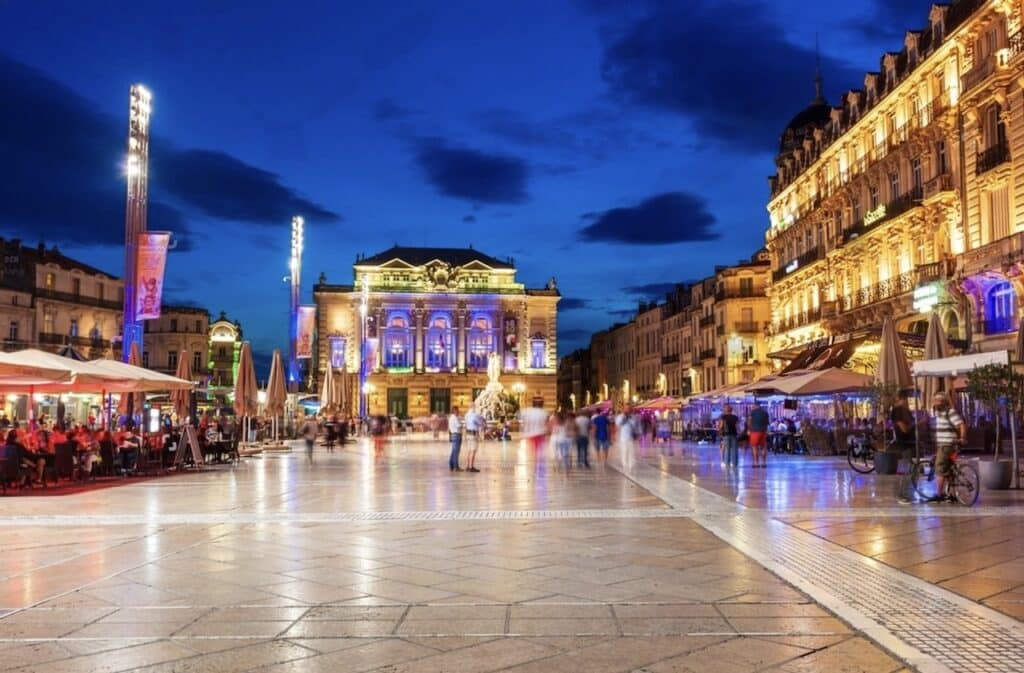
Place de la Comédie is the lively heart of Montpellier and a natural starting point for exploring the city. Sometimes called Place de l’Œuf because of its oval shape, this pedestrian square is lined with cafés, shops, and historic buildings.
At one end stands the Opéra Comédie, an Italian-style opera house completed in 1888. Near the center, you’ll find the Fountain of the Three Graces. The original marble sculpture was created in 1776 and is now protected inside the opera house; the version displayed on the fountain is a replica.
During my visit, I stopped for a café crème and watched street musicians, families, and locals pass through the square.
Highlights
- See the Fountain of the Three Graces.
- Admire the Opéra Comédie.
- Relax at a café terrace.
- Continue into the pedestrian streets of the Écusson.
Travel tip: Visit early for fewer crowds or return after sunset to see the square illuminated.
2. Wander Through the Écusson
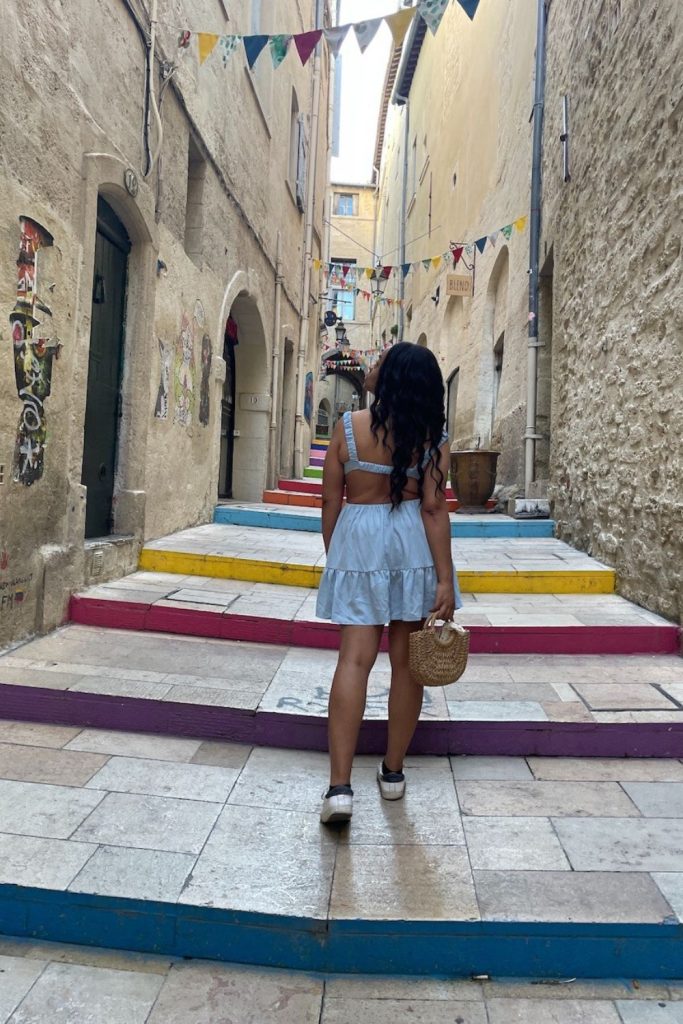
The Écusson is Montpellier’s historic center, known for its narrow pedestrian streets, elegant townhouses, small squares, boutiques, and café terraces. Its name comes from the shield-like shape of the neighborhood.
One of my favorite discoveries was Rue du Bras de Fer, a narrow passageway known for its colorful staircase and changing street art. Place Saint-Roch is another pleasant stop, with outdoor cafés surrounding the Church of Saint-Roch.
As you explore, look for the grand façades and doorways of Montpellier’s historic hôtels particuliers. Many of their interior courtyards are private, but some can be visited on guided tours offered by the Montpellier Tourism Office.
Highlights
- Photograph the colorful Rue du Bras de Fer.
- Browse shops along Rue de l’Argenterie.
- Stop for a drink in Place Saint-Roch.
- Discover historic mansions and hidden courtyards.
Travel tip: Take a guided walking tour to access courtyards and historical sites that are normally closed to the public.
3. Visit Montpellier Cathedral
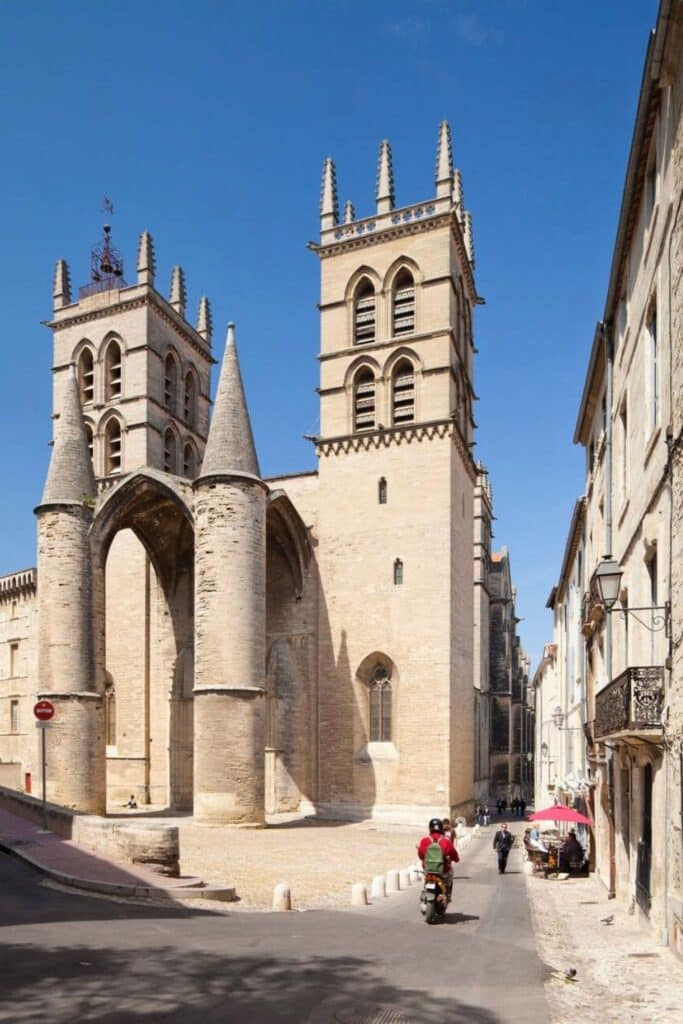
Montpellier Cathedral, also known as Cathédrale Saint-Pierre, is one of the most impressive landmarks in the Écusson. Construction began in the 14th century as the chapel of a Benedictine monastery founded by Pope Urban V. It became a cathedral in 1536 when the bishopric was transferred from Maguelone to Montpellier.
The cathedral is known for its fortress-like Gothic exterior and enormous cylindrical pillars supporting the porch. Inside, you’ll find soaring arches, stained glass, an impressive organ, and The Fall of Simon Magus, a significant painting by Montpellier-born artist Sébastien Bourdon.
The former monastery cloister is now part of the neighboring Faculty of Medicine and is best seen on an authorized guided visit.
Highlights
- See the cathedral’s monumental porch.
- Admire its Southern Gothic architecture.
- View Sébastien Bourdon’s historic painting.
- Combine your visit with the nearby Jardin des Plantes.
Travel tip: Admission is free, but the cathedral generally closes during lunchtime and may restrict sightseeing during religious services.
4. Enjoy the Views from Promenade du Peyrou
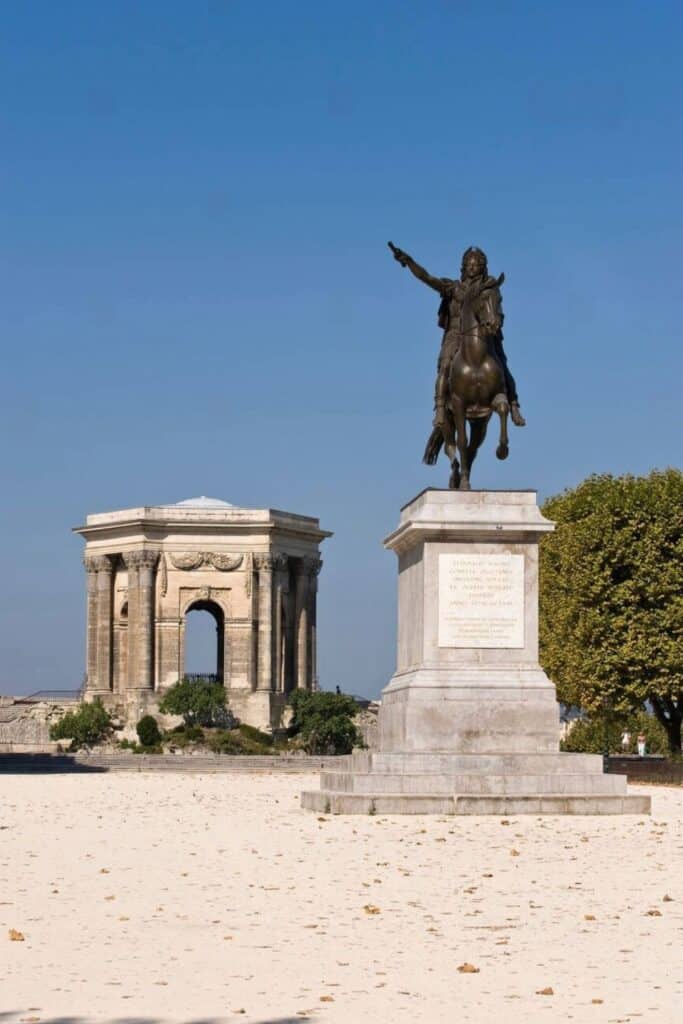

Promenade du Peyrou is a grand public park located at one of Montpellier’s highest points. From here, you can enjoy views across the city and, on a clear day, toward the surrounding countryside.
The promenade includes an equestrian statue of Louis XIV, an ornate 18th-century water tower, and the Saint-Clément Aqueduct. At the eastern entrance stands Montpellier’s Arc de Triomphe, built in 1692 in honor of Louis XIV.
I visited shortly before sunset, when the warm light made the promenade and surrounding rooftops especially beautiful. It is a peaceful place for a walk, picnic, or break between attractions.
Highlights
- See the Arc de Triomphe.
- Admire the Château d’Eau and Saint-Clément Aqueduct.
- Enjoy the elevated views at sunset.
- Browse the Sunday antique and flea market.
Travel tip: Les Dimanches du Peyrou takes place on Sundays from approximately 7:30 a.m. to 2:30 p.m. Bring some cash because not every vendor accepts cards.
5. Discover the Musée Fabre
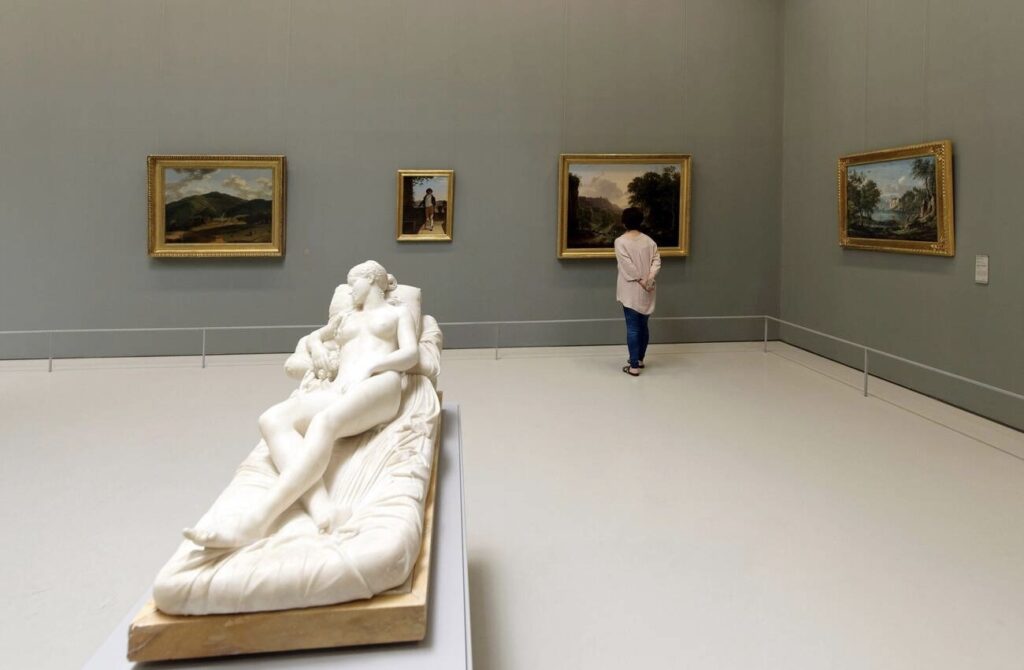
Founded in 1828 by Montpellier-born painter François-Xavier Fabre, the Musée Fabre is one of the city’s top cultural attractions. Its collection includes paintings, sculptures, decorative arts, and contemporary works.
Highlights include pieces by Delacroix, Courbet, Rubens, Frédéric Bazille, and Pierre Soulages. Plan to spend at least two hours exploring the main galleries.
Highlights
- See works by European masters.
- Discover Montpellier-born artist Frédéric Bazille.
- Explore the modern and contemporary collection.
Travel tip: The museum is generally open Tuesday through Sunday from 11 a.m. to 6 p.m. The permanent collection is free on the first Sunday of each month.
6. Visit Marché du Lez and Halles du Lez
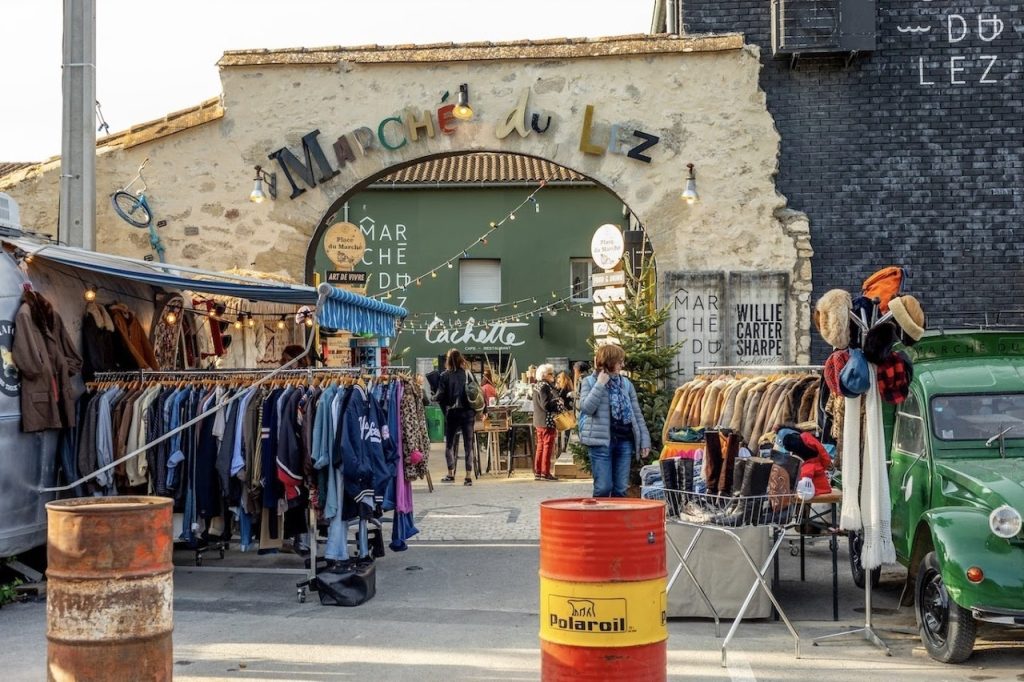
Marché du Lez is a creative riverside district filled with restaurants, vintage shops, art, and event spaces. Within the complex, Halles du Lez offers a lively food hall with vendors serving French and international dishes.
I enjoyed the relaxed, bohemian atmosphere and the variety of places to eat and browse. It is a good choice for lunch, drinks, or an evening away from the historic center.
Highlights
- Sample dishes inside Halles du Lez.
- Browse vintage and secondhand shops.
- Look for murals and creative installations.
- Check the calendar for markets and special events.
Travel tip: Individual restaurants, shops, and market areas have different opening hours, so check the official website before visiting.
7. Relax at Parc Zoologique de Montpellier
UPDATE: Closed on August 1, 2026, for a 29-month renovation, with reopening expected during the second half of 2028
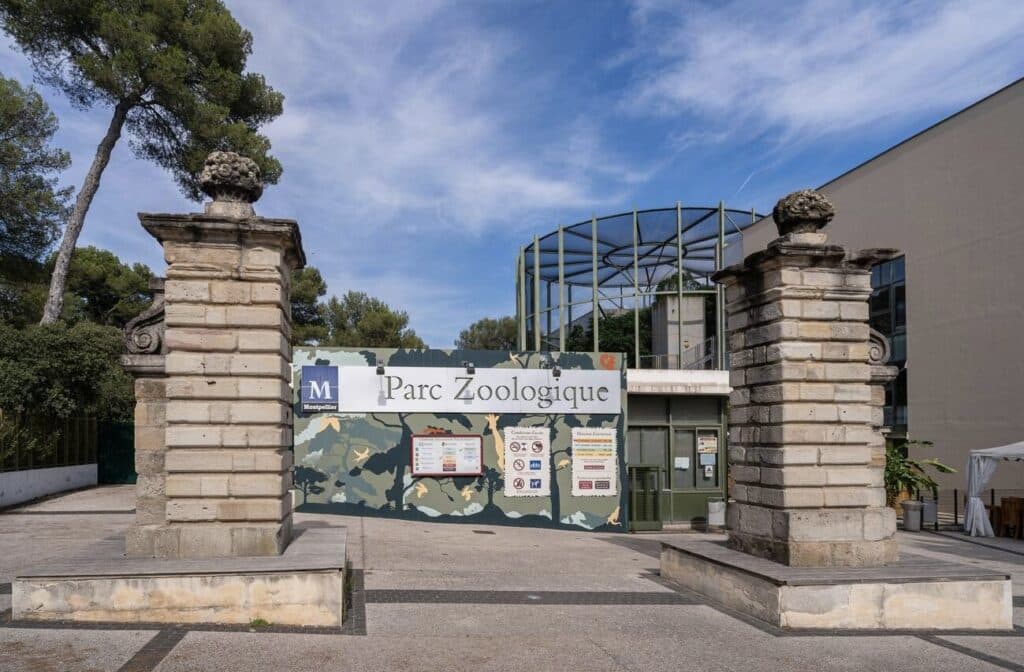
Visiting the Parc Zoologique de Montpellier is one of the best free things to do in Montpellier, making it a great option for budget travelers.
I was surprised by how large the zoo is, you can easily spend half a day exploring the trails and spotting animals. It’s a great spot if you are looking for things to do in Montpellier with kids and an affordable way to enjoy the city.
Highlights
- Home to over 120 species, including giraffes and cheetahs.
- The Amazonian greenhouse, featuring exotic plants and animals.
👉 Looking for more Southern France destinations? Check out our guide to the Best Cities to Visit in Southern France.
8. Go Wine Tasting in the Languedoc Region
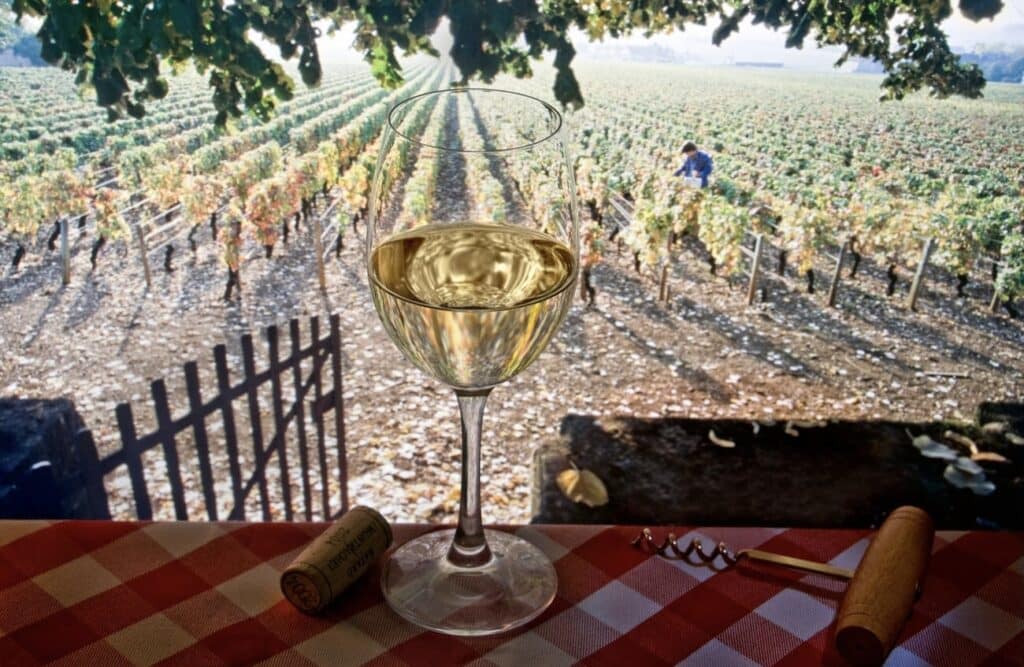
Montpellier is surrounded by vineyards, making it an excellent base for exploring the Languedoc wine region. One popular destination is Pic Saint-Loup, an appellation north of the city known primarily for its red and rosé wines.
During my visit, I joined a guided wine tour through the Pic Saint-Loup area. Visiting the vineyards and learning about the region’s winemaking traditions was one of the highlights of my trip.
Closer to Montpellier, Château de Flaugergues and Domaine de Rieucoulon also offer opportunities to discover local wines.
Travel tip: Want to experience the vineyards without driving? Check availability for this Pic Saint-Loup wine and food tour, which includes transportation from Montpellier and guided visits to local wineries.
9. Take a Day Trip to Sète
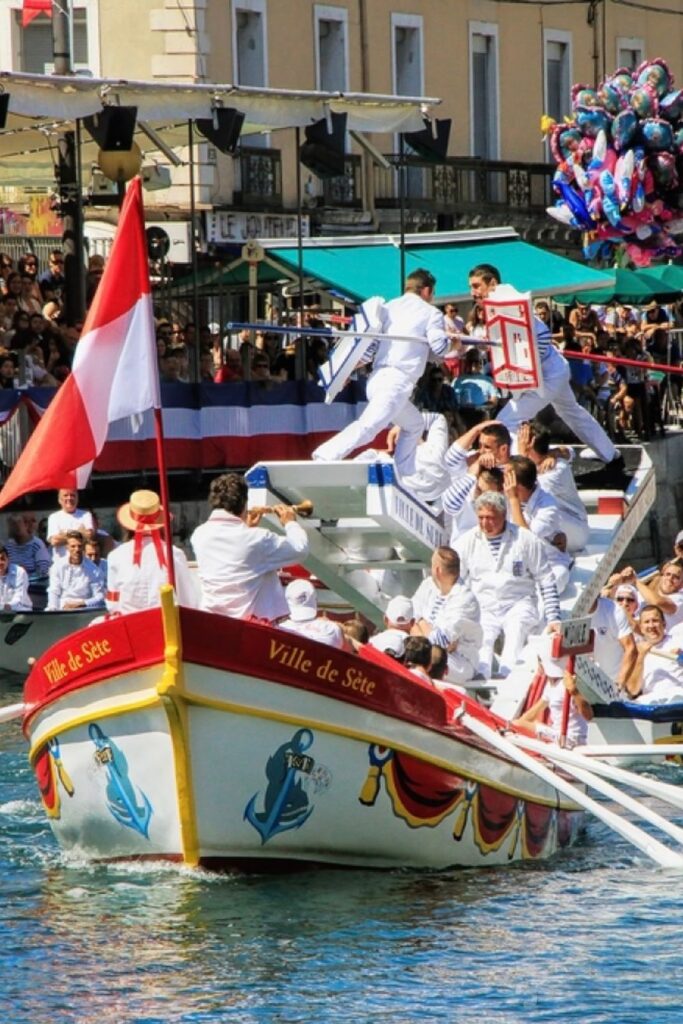
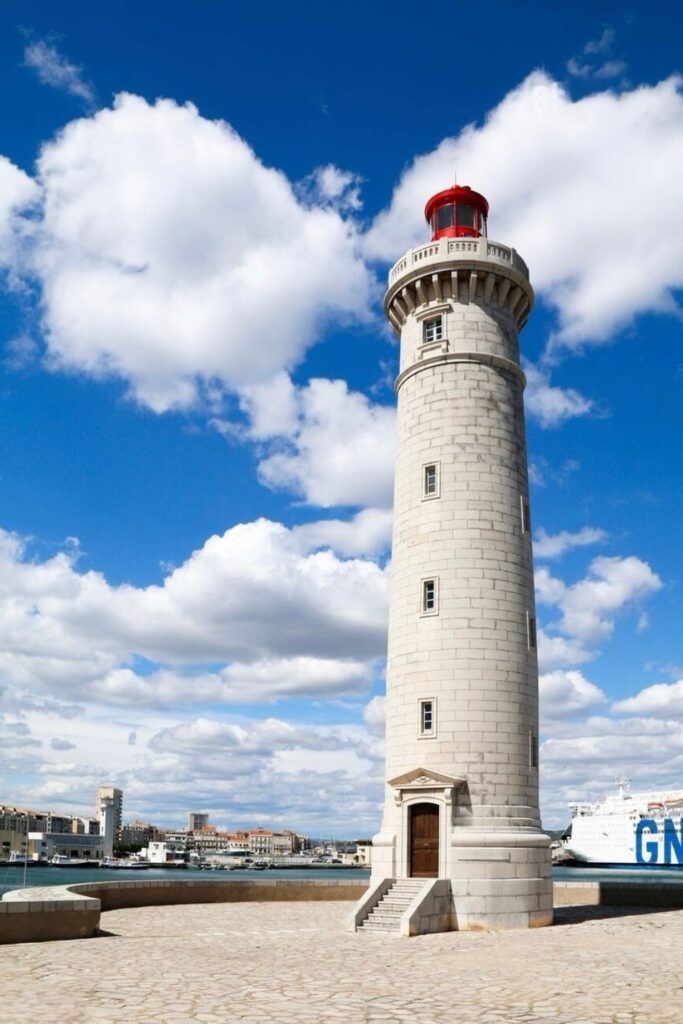
Known for its canals, fishing traditions, and waterfront restaurants, Sète is one of the easiest day trips from Montpellier. Direct regional trains generally take about 20–30 minutes, depending on the service.
Spend the day walking along the canals, browsing the market, or climbing Mont Saint-Clair for views over the town and Mediterranean coast. You can also take a seasonal boat tour through the canals.
If you visit in August, check the dates of the Fête de la Saint-Louis, when traditional water-jousting competitions take place.
Travel tip: Try a tielle sétoise, Sète’s savory pie filled with octopus and a spiced tomato sauce.
👉 Related Post: Best Day Trips from Montpellier.
10. Unwind at Espiguette Beach
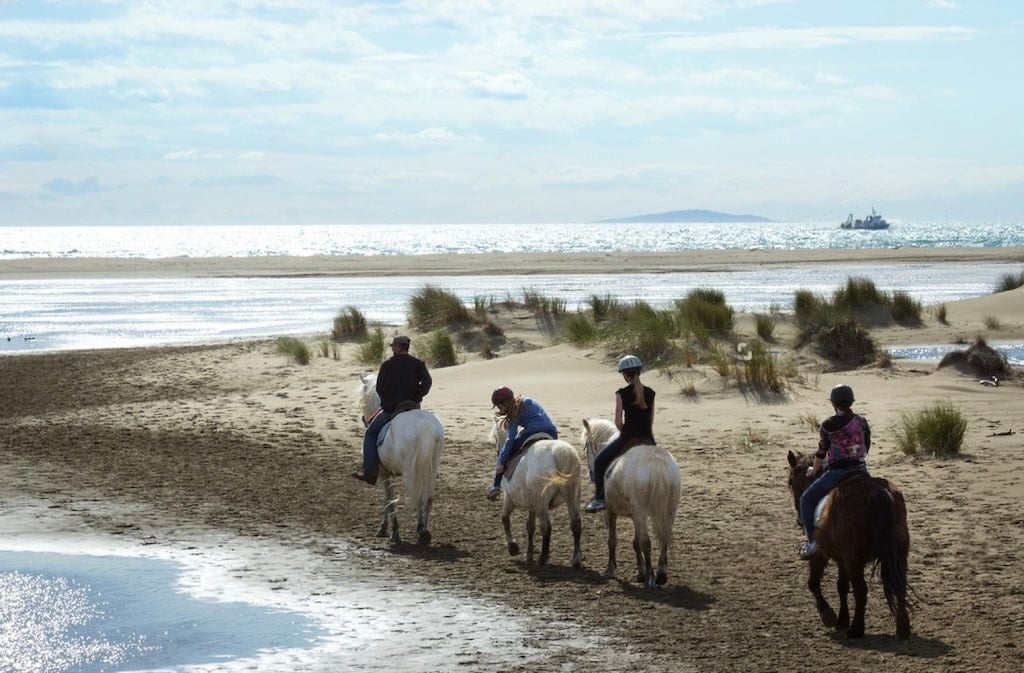
Located near Le Grau-du-Roi, Espiguette Beach is known for its wide stretch of sand and protected dune system. Its undeveloped landscape feels noticeably wilder than many beaches closer to Montpellier.
The beach is ideal for walking, sunbathing, swimming, and enjoying a quieter section of the Mediterranean coast. However, facilities vary depending on which access point you use.
Espiguette is easiest to reach by car and is better planned as a half-day or full-day excursion.
Travel tip: Bring water and sun protection, and avoid walking on protected dunes or entering areas closed for conservation.
11. Explore the Antigone District
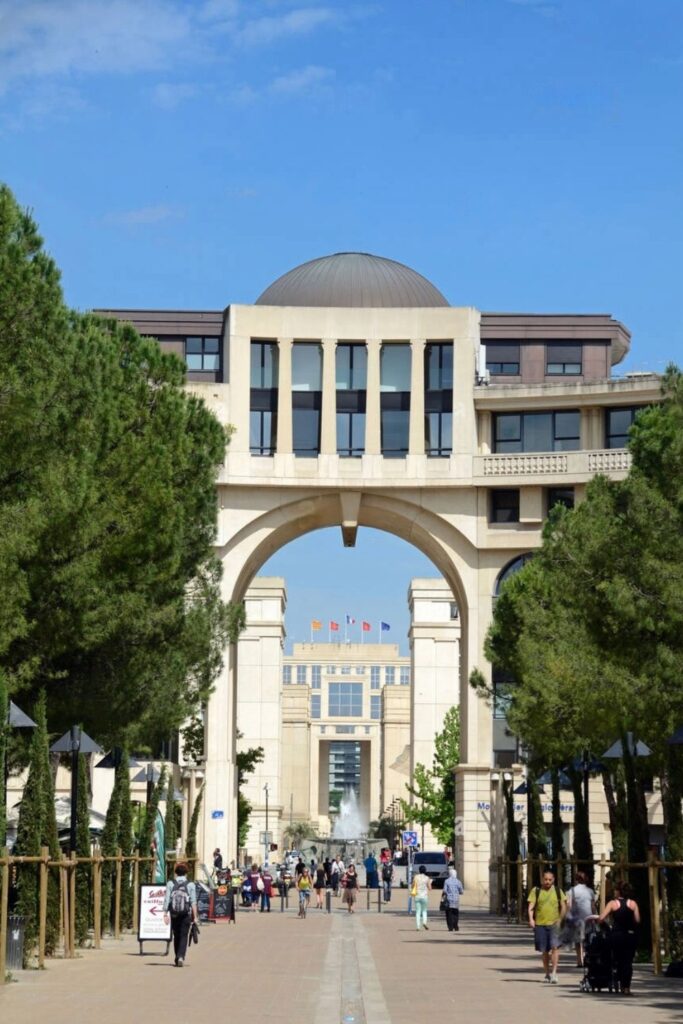
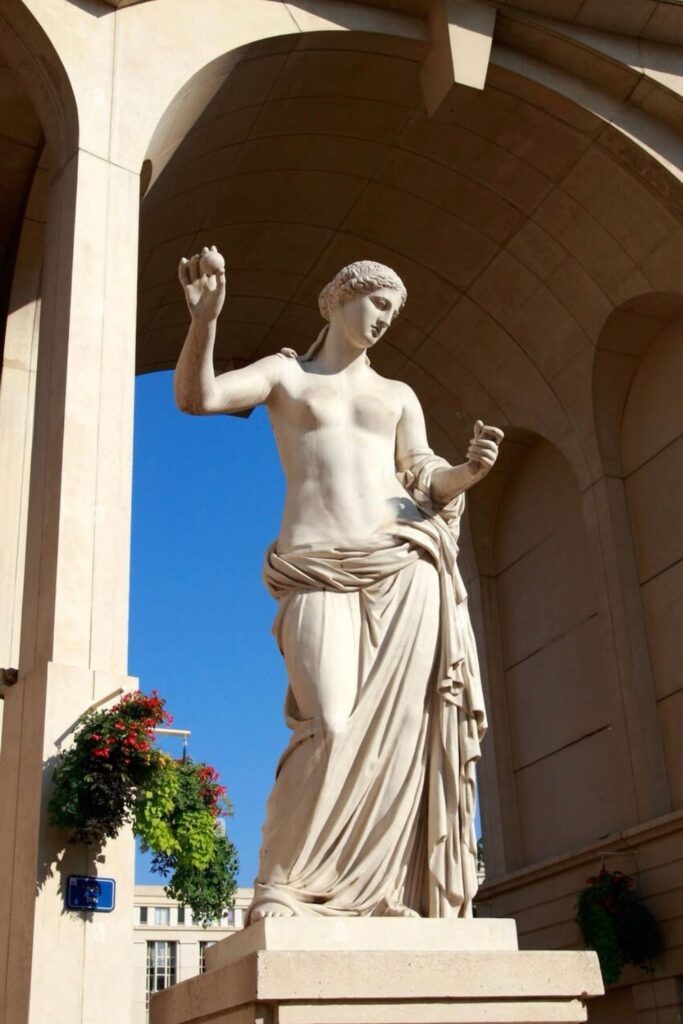
Designed by Spanish architect Ricardo Bofill and developed primarily during the 1980s, Antigone offers a striking contrast to the narrow streets of Montpellier’s historic center.
The neighborhood features neoclassical buildings, symmetrical plazas, grand columns, and wide pedestrian walkways. Begin near the Polygone shopping center and continue through Place de Thessalie toward the Lez River and Esplanade de l’Europe.
The walk is free and provides an interesting look at Montpellier’s modern architectural identity.
Travel tip: Visit during the morning or late afternoon when the softer light emphasizes the district’s geometric architecture.
12. Taste Local Food and Wine

Montpellier is a great place to sample specialties from across the Languedoc and Mediterranean coast.
Try a tielle sétoise, a savory pie filled with octopus and spiced tomato sauce, or look for Pélardon, a small goat cheese produced in the region. Other specialties include petits pâtés de Pézenas and local Languedoc wines.
Marché des Arceaux is a good place to browse regional produce, bread, cheese, and prepared foods. The market takes place on Tuesday and Saturday mornings.
For a sit-down meal, Le Petit Jardin serves Mediterranean-inspired dishes in a garden setting, while Pastis offers refined seasonal cuisine.
Travel tip: Restaurant and market hours can change, so confirm opening times before visiting.
Hidden Gems in Montpellier
Medieval Mikvé
Hidden beneath a building in the Écusson, Montpellier’s medieval mikvé is a Jewish ritual bath dating from the 12th century. It is one of the city’s most significant medieval sites and can only be visited on selected guided tours through the Montpellier Tourism Office.
Tour de la Babote
Tour de la Babote is one of the surviving towers from Montpellier’s medieval fortifications. It later became an astronomical observatory during the 18th century. Interior access is limited, so check the tourism office’s guided-tour schedule.
Jardin des Cinq Continents
Located at MO.CO. Hôtel des Collections, Jardin des Cinq Continents combines contemporary design with plants representing different parts of the world. Entry to the garden is free, making it a peaceful stop near Montpellier Saint-Roch station.
Travel tip: Reserve guided visits to the mikvé and Tour de la Babote in advance because public access is limited.
A Perfect 3-Day Montpellier Itinerary
Day 1: Historic Montpellier
Morning
- Have breakfast near Place de la Comédie.
- Explore Place de la Comédie and the Écusson.
- Visit Montpellier Cathedral.
Afternoon
- Have lunch in the historic center.
- Walk through Jardin des Plantes.
- Visit the Arc de Triomphe and Promenade du Peyrou.
Evening
- Watch the sunset from Peyrou.
- Have dinner at Le Petit Jardin or another restaurant in the Écusson.
Day 2: Art, Architecture, and Wine
Morning
- Visit the Musée Fabre.
- Walk through Antigone toward the Lez River.
Afternoon
- Have lunch at Halles du Lez.
- Visit Château de Flaugergues or join a half-day Pic Saint-Loup wine tour.
Evening
- Return to central Montpellier for dinner and drinks.
Day 3: Day Trip to Sète
Morning
- Take a direct train from Montpellier to Sète.
- Walk along the canals and browse the market.
- Climb Mont Saint-Clair for panoramic views.
Afternoon
- Try a tielle sétoise for lunch.
- Take a seasonal canal boat tour or visit the waterfront.
Evening
- Return to Montpellier for dinner.
Alternative Beach Day
If you prefer the beach, replace Sète with a half-day or full-day trip to Espiguette Beach. Espiguette is easiest to reach by car and should not be combined with a wine tour on the same afternoon.
💡 Don’t forget to save my interactive Montpellier itinerary map for easy navigation while you’re there!
Things to Do in Montpellier, France FAQ
Final Thoughts on Visiting Montpellier
From historic streets and impressive museums to regional wine and Mediterranean day trips, there are plenty of memorable things to do in Montpellier. The city is easy to explore on foot, less overwhelming than many larger French destinations, and well positioned for discovering more of the Languedoc region.
My biggest advice is to leave room in your itinerary for wandering. Some of Montpellier’s best moments come from finding a quiet square, relaxing at a café terrace, or noticing an architectural detail you might otherwise pass by.
Which Montpellier attraction would you add to your itinerary? Share your plans or favorite places in the comments below.