



How to Use the Metro in Paris (Confident First-Timer Guide 2026)
Last Updated on September 14, 2026 by April Nicole
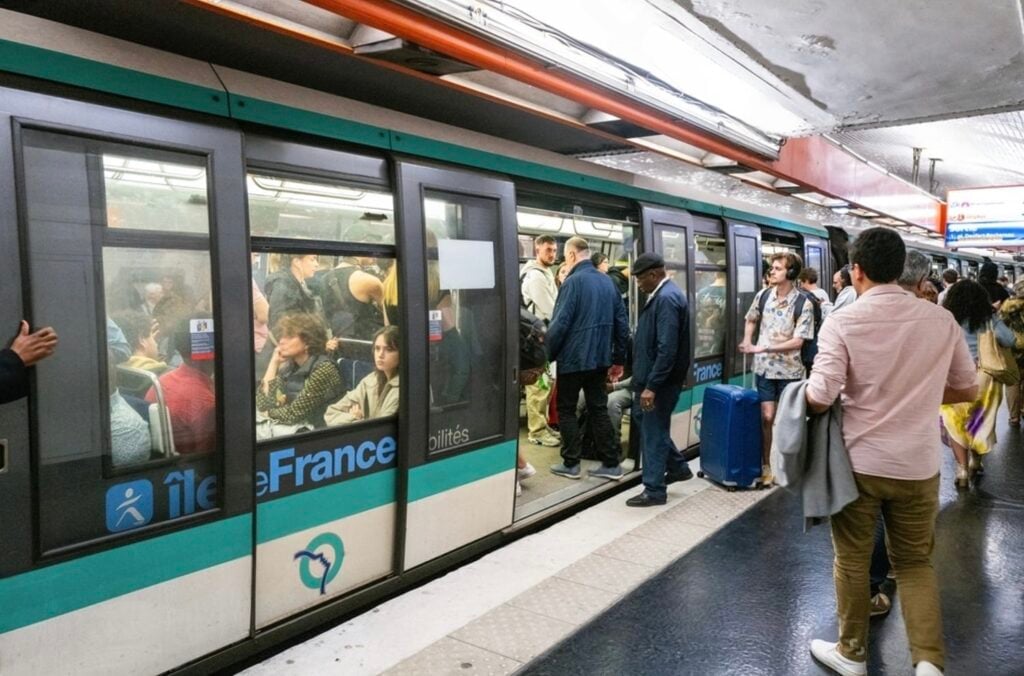
When I first moved to Paris in 2021, figuring out how to use the metro in Paris was honestly a headache. The signs, the transfers, the tickets, it felt like everyone else knew what they were doing except me. Fast-forward to now, and I use it every day without thinking.
This guide is everything I wish someone had explained to me back then. I’ll show you the easiest way to choose the right ticket, switch lines without getting lost, avoid fines, and feel totally confident underground. If you’re visiting for the first time, consider this your “friend-who-already-lives-here” rundown.
Last updated: November 2025 — Fares and rules can change. Always double-check in the official Bonjour RATP or Île-de-France Mobilités (IDFM) apps before traveling.
Quick Paris Metro Cheat Sheet for 2026
🎟️ Metro–Train–RER Ticket: €2.55
🚌 Bus–Tram Ticket: €2.05
💳 Navigo Easy Card: €2, plus the tickets you load onto it
📅 Navigo Day Pass: €12.30
🟣 Navigo Weekly Pass: €32.40, plus €5 for a Navigo Découverte card
✈️ Airport Ticket: €14 for Orly Airport or Charles de Gaulle Airport
🏰 Versailles and Disneyland Paris: €2.55 each way on eligible Metro, RER, or train routes
📱 Tickets: Navigo Easy card or compatible smartphone
🔐 Safety: Keep your phone and wallet secured, especially near train doors
📲 Helpful Apps: Île-de-France Mobilités, Bonjour RATP, and Citymapper
Paris Metro Basics and 2026 Ticket Changes
Flat €2.55 Metro–Train–RER Ticket
- The Metro–Train–RER Ticket costs €2.55 per journey in 2026.
- It covers the Metro, RER, regional trains, and the Montmartre funicular throughout the Île-de-France region.
- The flat fare applies regardless of distance, making trips to Versailles and Disneyland Paris much easier.
- Airport stations are excluded and require a separate €14 airport ticket.
- Transfers between the Metro, RER, and regional trains are allowed for up to two hours, as long as you stay inside the transportation network.
- Transfers to buses and trams are not included.
- Tickets are available on a Navigo Easy card or compatible smartphone.
Airport Travel Requires a Separate Ticket
The standard €2.55 Metro–Train–RER Ticket does not cover entry or exit at Orly Airport or Charles de Gaulle Airport.
- Orly Airport: Take Metro Line 14 directly between central Paris and Aéroport d’Orly.
- Charles de Gaulle Airport: Take RER B to Aéroport Charles de Gaulle 1 or Aéroport Charles de Gaulle 2 TGV.
- Airport fare: A Paris Region Airports Ticket costs €14 each way in 2026.
- Navigo Weekly Pass: The all-zones weekly pass covers Metro Line 14 to Orly and RER B to Charles de Gaulle.
Orlyval still operates between Antony and Orly Airport, but the direct Line 14 connection is easier for most travelers coming from central Paris. Orlyval has separate ticketing rules.
Prefer not to navigate public transportation with luggage? If you’re arriving after a long flight or traveling with several bags, a prebooked airport transfer can be an easier alternative to taking the Metro or RER into Paris.
Compare Paris airport transfer options →
Can You Tap a Bank Card at the Metro Gate?
You generally cannot enter the Paris Metro by tapping a regular Visa, Mastercard, or contactless bank card directly at the gate.
However, you can use a compatible iPhone, Apple Watch, Android phone, or smartwatch after purchasing an eligible Paris transit ticket and storing it on the device.
Visitors can purchase and use tickets through:
- The Île-de-France Mobilités app
- The Bonjour RATP app
- A Navigo Easy card
- A compatible smartphone or smartwatch
- A Navigo Découverte card for weekly passes
Best Options for Visitors
- A few Metro rides: Buy individual €2.55 Metro–Train–RER tickets.
- Five or more rides in one day: Consider the €12.30 Navigo Day Pass.
- A trip that falls mostly between Monday and Sunday: Compare individual tickets with the €32.40 Navigo Weekly Pass.
- Orly or Charles de Gaulle Airport: Buy the separate €14 Paris Region Airports Ticket unless your airport journey is covered by an all-zones Navigo weekly pass.
The best option depends on how many rides you expect to take, which days of the week you are visiting, and whether you need airport transportation.
How the Paris Metro Is Organized (Lines, Colors & Direction)
The Paris Metro looks complicated at first, but once you learn how it’s organized, it becomes surprisingly easy to use.
- Paris has 16 Metro lines in total: Lines 1 through 14, plus the shorter Lines 3bis and 7bis.
- Every line has its own color and number — you’ll see both on signs, maps, and platforms.
- Stations list the final stop on each line to show you the direction. Paris doesn’t use “northbound/southbound” — it’s all about the terminus.
Example: If you’re riding Line 1 from the Arc de Triomphe to the Louvre, you follow signs toward Château de Vincennes (the end of the line).
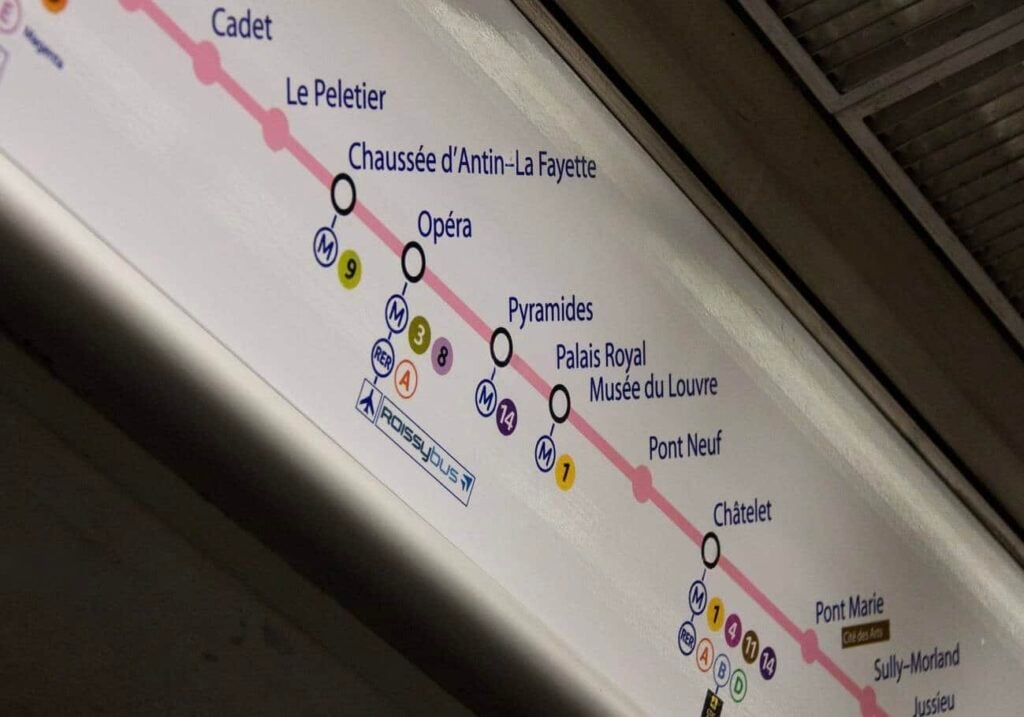
Local Tip: When in doubt, check the small line map above the platform, it highlights every stop in order and confirms you’re going the right way. I still do this when I’m tired or rushing between trains!
Metro vs RER vs Trams (What Tourists Actually Use)
Paris has several transit systems, but you’ll mostly rely on the Metro. Here’s the quick breakdown:
- 🚇 Metro (best for most travel): Fast, frequent, and perfect for short hops across central Paris. Stations are close together, ideal for sightseeing days with lots of stops.
- 🚆 RER trains (for long distances): Fewer stops, faster speeds. Best for Disneyland (RER A), Versailles (RER C), and connecting to CDG/Orly if you have the right ticket. Platforms are bigger and feel more like commuter rail.
- 🚊 Trams (outer Paris): Mostly circle the edges of the city. Useful if your hotel is outside the center, but not essential for first-time visitors.
Paris Metro Operating Hours, Frequency and Rush Hour
The Paris Metro generally begins operating around 5:30 a.m. Last-train times vary depending on the line, station, direction, and day of the week.
Service normally runs later on Friday and Saturday nights and on nights before public holidays. Always check the Bonjour RATP or Île-de-France Mobilités app for the final departure from your specific station.
🚆 Typical train frequency:
- Approximately every 2–5 minutes during much of the day
- Less frequently late at night
- Service may be reduced during construction, disruptions, strikes, or scheduled maintenance
🌅 Less crowded times:
- Before the morning rush
- Between the morning and evening commuting periods
- Later in the evening
🚫 Busiest times:
- Approximately 8–9:30 a.m.
- Approximately 5–7 p.m.
If you are traveling with luggage, a stroller, or mobility limitations, allow extra time during rush hour.
Which Ticket or Pass Should You Buy in 2026?
Paris simplified its transportation fares in 2025, but ticket prices increased again on January 1, 2026. Most visitors now choose between individual Metro–Train–RER tickets, a Navigo Day Pass, a Navigo Weekly Pass, or a Paris Visite Pass.
The old discounted carnet of 10 Metro tickets is no longer available. You can still purchase and load multiple individual tickets, but each ticket is charged at the regular €2.55 fare.
Paris Metro Tickets and Passes for 2026
🎟️ Metro–Train–RER Ticket: €2.55
- Valid on the Metro, RER, regional trains, and Montmartre funicular
- Covers trips throughout Île-de-France, excluding airport stations
- Valid for eligible transfers for up to two hours without leaving the network
- Does not include transfers to buses or trams
- Best for visitors taking only a few rides
🚌 Bus–Tram Ticket: €2.05
- Valid on eligible buses and trams
- Separate from the Metro–Train–RER Ticket
- A Metro–Train–RER ticket cannot be used to transfer to a bus or tram
- Best for individual bus or tram journeys
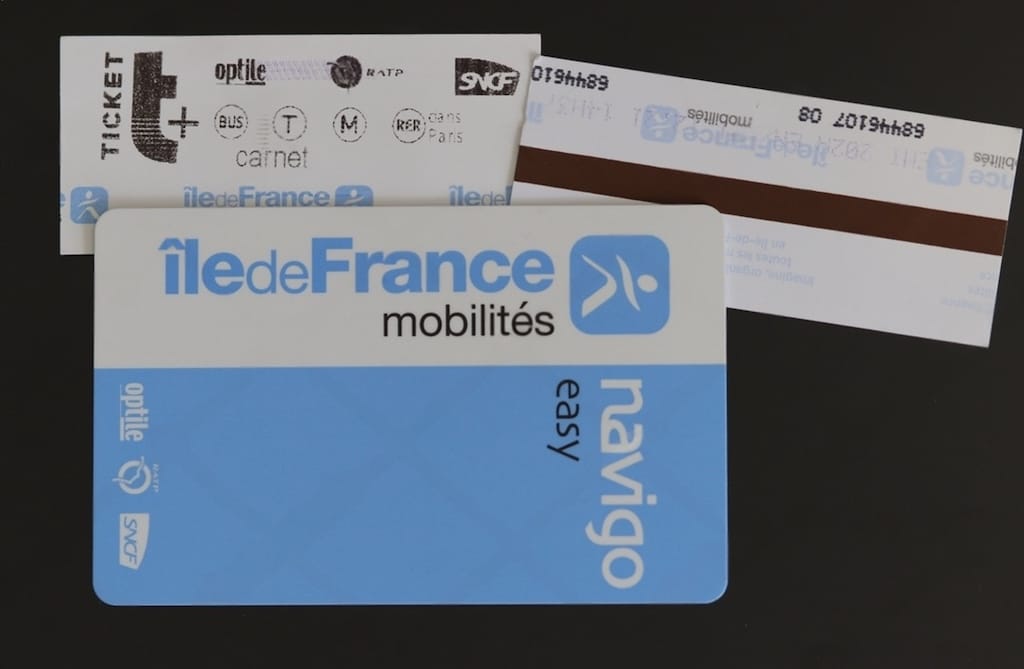
💳 Navigo Easy Card: €2
- Reloadable, contactless transportation card
- Can hold eligible individual tickets and day passes
- Reusable for up to 10 years
- Each traveler needs a separate card
- Best for visitors who do not want to use their phone as their ticket
There is no discounted digital carnet in 2026. You can load multiple individual tickets onto the card, but each Metro–Train–RER ticket costs €2.55.
📅 Navigo Day Pass: €12.30
- Provides unlimited eligible travel for one calendar day
- Covers all five transportation zones
- Does not include Orly or Charles de Gaulle airport travel
- Can save money when taking five or more eligible rides in one day
🟣 Navigo Weekly Pass: €32.40
- Runs from Monday through Sunday
- Does not cover seven consecutive days of your choice
- Covers unlimited travel throughout all five zones
- Includes Metro Line 14 to Orly and RER B to Charles de Gaulle
- A physical Navigo Découverte card costs an additional €5 and requires your name and photograph
This pass is usually best when your visit falls mostly within the same Monday-to-Sunday period.
✈️ Paris Region Airports Ticket: €14
- Required for Metro Line 14 to or from Orly Airport
- Required for RER B to or from Charles de Gaulle Airport
- Valid for eligible transfers between Metro, RER, and train services
- Does not cover Orlyval
- Best for travelers without an airport-inclusive Navigo pass
🎫 Paris Visite Pass: €30.60–€78
- Available for 1, 2, 3, or 5 consecutive days
- Covers all five zones
- Includes eligible travel to Orly and Charles de Gaulle airports
- Adult prices range from €30.60 for one day to €78 for five days
- Often more expensive than other options, so compare the total cost before buying
Which Paris Transportation Pass Should You Choose?
⭐ You only expect to take a few rides:
Buy individual €2.55 Metro–Train–RER tickets.
⭐ You expect to take five or more rides in one day:
Consider the €12.30 Navigo Day Pass. Remember that airport travel is not included.
⭐ Your trip falls mostly between Monday and Sunday:
Compare your expected ticket costs with the €32.40 Navigo Weekly Pass. The weekly pass includes unlimited travel and eligible airport connections.
⭐ Your visit crosses two different calendar weeks:
Individual tickets, day passes, or Paris Visite may be more practical because the Navigo Weekly Pass always ends on Sunday.
⭐ You are visiting Disneyland Paris or Versailles:
A regular €2.55 Metro–Train–RER Ticket covers each eligible one-way journey. Airport tickets are not required for these destinations.
⭐ You need a simple pass that includes airports:
Compare the Paris Visite Pass with a Navigo Weekly Pass. Paris Visite offers consecutive-day validity, while Navigo Weekly follows a fixed Monday-to-Sunday schedule.
How to Buy & Use Tickets (Machines, Apps, Navigo)
Buying metro tickets in Paris used to feel like a mini puzzle — new machines, unfamiliar menus, and lines of locals who somehow tap twice and disappear. The good news? In 2025, buying tickets is much simpler, and once you do it once, you’ll feel like you’ve lived here for years. Here’s exactly how it works, step by step.
Buying at the Station (Machines vs Ticket Window)
If you prefer doing things in person, you’ve got two easy options: ticket machines or ticket windows.
🎛️ Ticket Machines (Fastest + Always Available)
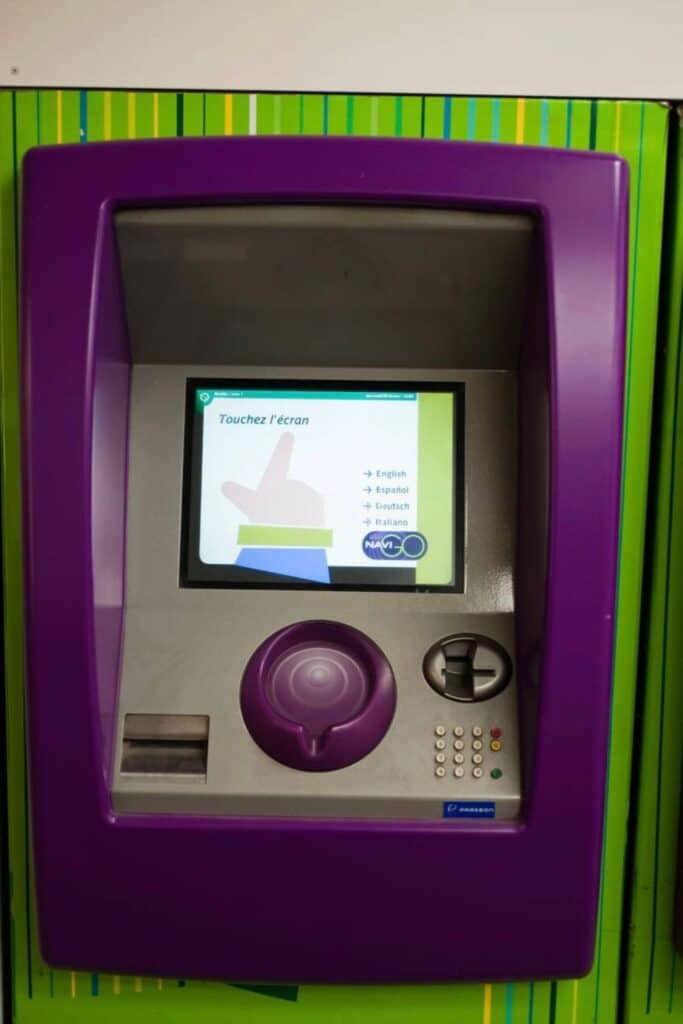
The purple Île-de-France Mobilités machines are in every metro station.
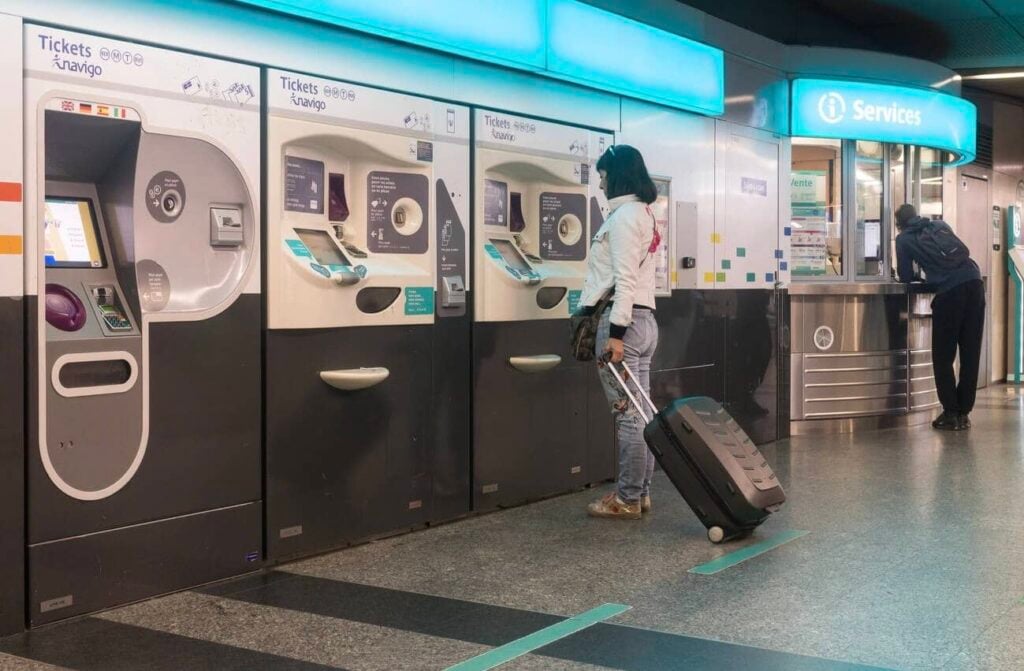
Here’s how to use them without stress:
- Tap the screen and choose English (bottom right).
- Select “Tickets & Passes.”
- Choose an individual ticket, day pass, weekly pass, airport ticket, or the option to reload your Navigo card.
- Pay by contactless card, chip & pin, or coins
- If you’re loading onto a Navigo Easy, tap your card on the reader when prompted.
Local Tip: Most international chip and contactless payment cards work at ticket machines, but it is helpful to have a second payment method available in case your card is declined.
👩💼 Ticket Windows (Best for Navigo Découverte)
Staffed windows are available at major stations like Gare du Nord, Saint-Lazare, Châtelet, and Montparnasse-Bienvenüe.
Go here if you need to:
- Buy a Navigo Découverte (weekly pass card)
- Get help with a machine
- Buy specific airport tickets
- Ask questions in English (staff are generally patient and kind)
What to bring for a Navigo Découverte card: Bring a small identification-style photograph. You must attach the photo to the card and write your name on it before traveling. A Navigo Découverte card without the required name and photograph may be considered invalid during an inspection.
Using Your Phone as a Ticket (Bonjour / Île-de-France Mobilités)
This is the easiest option for most visitors, and what many locals use now.
You’ll need either of these free apps: Bonjour RATP or Île-de-France Mobilités (IDFM). Both let you buy digital tickets and use your phone as your ticket.
📱 How to Use Your Phone as a Metro Ticket
- Download the Île-de-France Mobilités or Bonjour RATP app.
- Open the app and select the option to purchase transportation tickets.
- Choose the ticket or pass you need.
- Follow the instructions to store the ticket on your compatible phone or smartwatch.
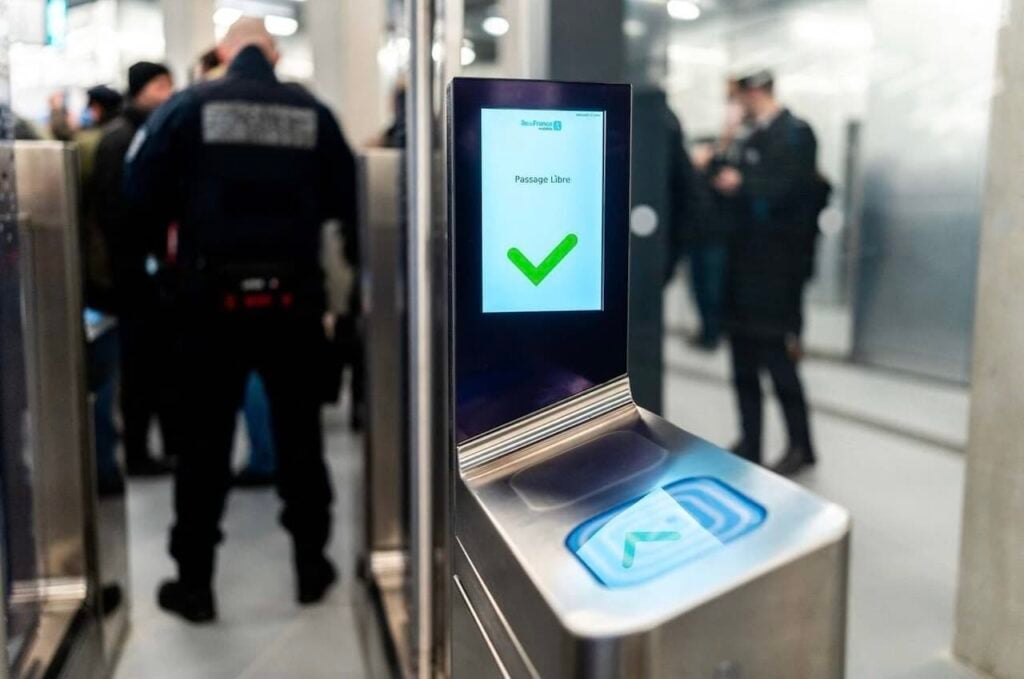
- Hold the appropriate part of your device near the reader at the Metro gate.
- Wait for the validation confirmation before walking through.
Ticket availability and setup steps can differ slightly between iPhone and Android devices. Set up your ticket before arriving at the station, and make sure your phone has enough battery for the entire journey.
Topping Up Navigo Easy & Navigo Découverte
If you’re using a Navigo Easy or Navigo Découverte, topping up is simple.
💳 Navigo Easy Card
The Navigo Easy card is a reusable contactless card that costs €2. It can be reloaded at eligible ticket machines, staffed ticket windows, or through a compatible phone using the Île-de-France Mobilités app.
You can load individual Metro–Train–RER tickets, Bus–Tram tickets, and certain passes onto the card. However, some ticket types cannot be stored together on the same card.
A Navigo Easy card is reusable for up to 10 years, but each traveler needs a separate card. You cannot validate one card several times to pay for multiple people traveling together.
🟣 Navigo Découverte Card
The Navigo Découverte card is commonly used by visitors who want to load a Navigo Weekly Pass.
The card costs €5 and requires the traveler’s name and a small identification-style photograph. Once the card has been properly personalized, it can be reloaded at ticket machines, staffed ticket windows, or through a compatible mobile app.
The weekly pass runs from Monday through Sunday. You do not need to provide a new photograph every time you reload the card.
Validating Your Ticket & Keeping It Until You Exit
One of the biggest mistakes first-time riders make in Paris is not validating their ticket properly. Here’s how to avoid fines and awkward moments.
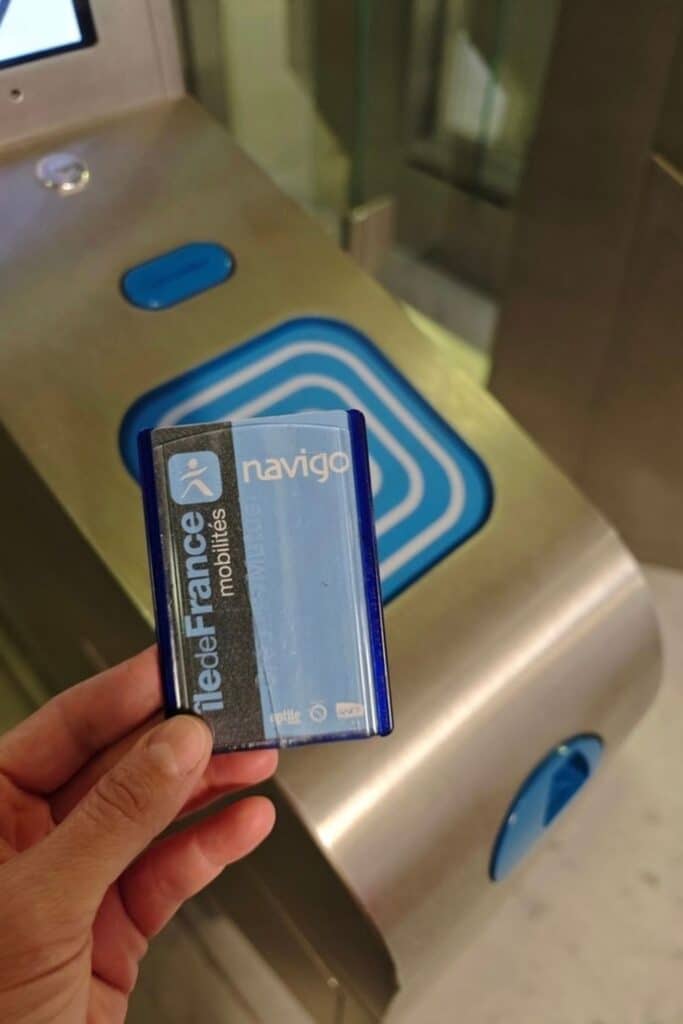
🚇 If you’re using a phone or Navigo card
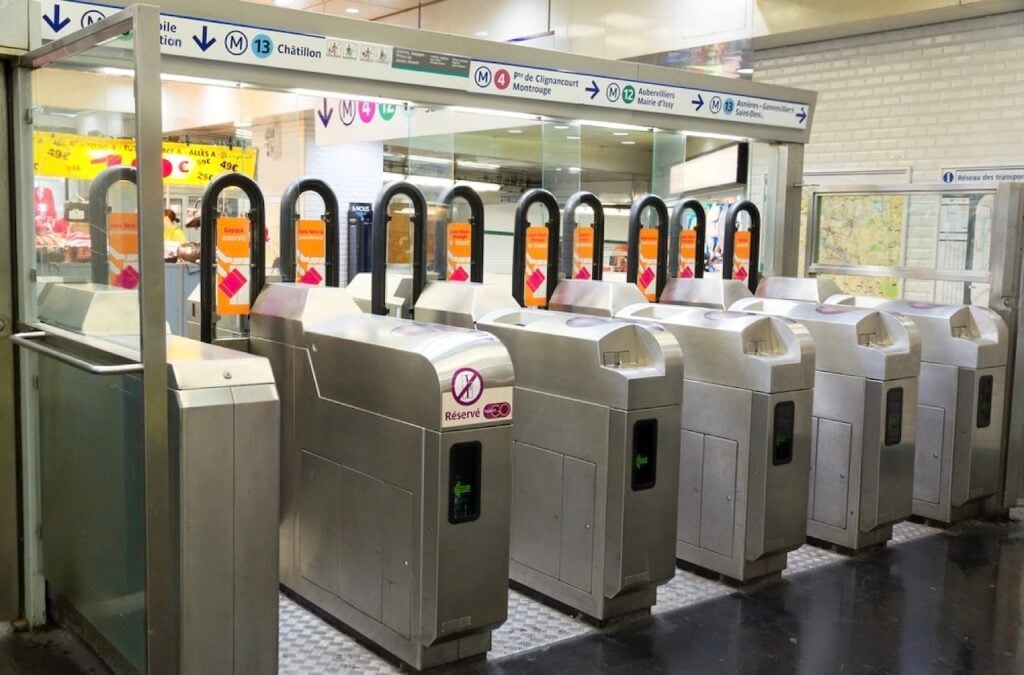
- Tap the phone/card on the purple reader at the gate
- Wait for the green arrow + beep
- Walk through
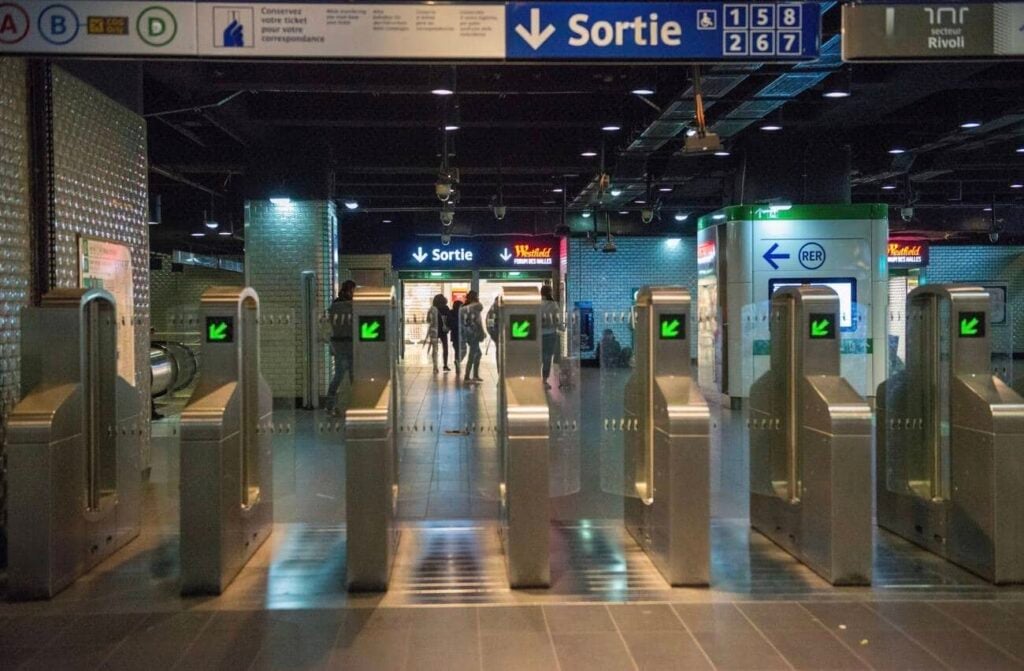
You don’t need to tap out when exiting the Metro, only when entering.
This applies to most Metro exits. When traveling on the RER or regional train network, you may need to validate your card, phone, or ticket again to exit the station. Keep your ticket or device available until you have completely left the transportation network.
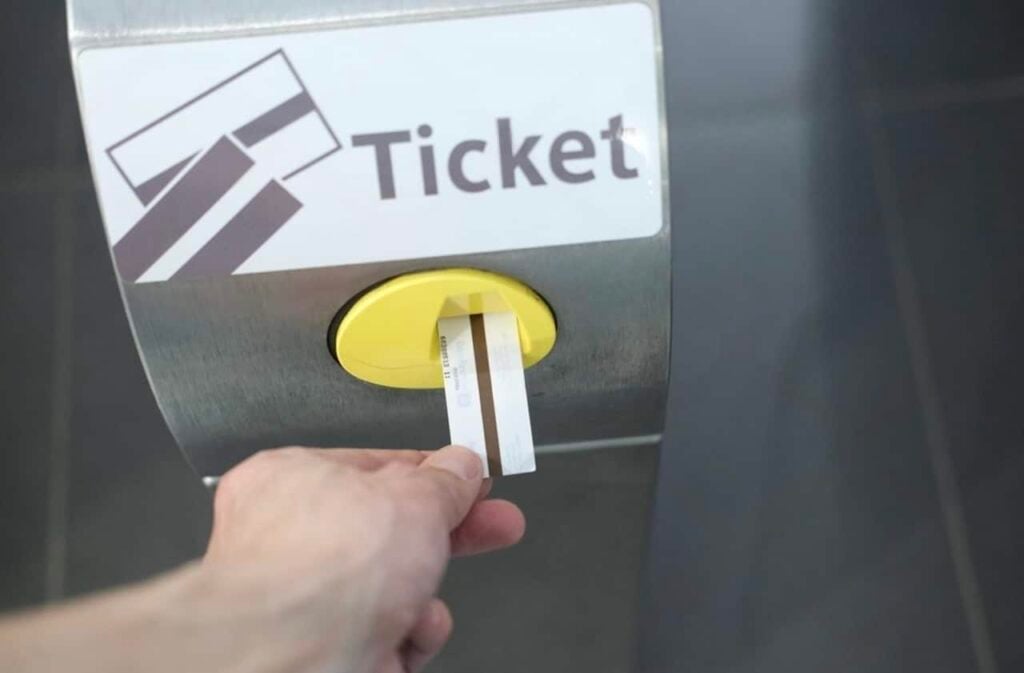
🎟️ If you’re using a paper airport ticket
- Insert the ticket into the yellow slot
- Grab it when it pops out
- Keep it with you
- You’ll also need it to exit the airport line gates
Why keeping your ticket matters
Random ticket inspections are common on the Metro, RER, buses, and regional trains. You must be able to present the same validated ticket, card, or phone used for your journey.
Fine amounts depend on the violation and whether payment is made immediately or later. Inspectors generally do not waive penalties simply because a traveler is unfamiliar with the system.
Local Tip: Slip your ticket or card back into the same pocket every time. I learned the hard way after losing a ticket at Châtelet and panicking during an inspection.
Avoiding Fines & Common Tourist Mistakes
Let’s be honest: no one wants their Paris memories to include a surprise €35–€80 fine. Metro inspectors are real, they appear often (especially on the RER), and they don’t usually make exceptions, even if you’re a confused visitor who simply made a mistake.
7 Common Mistakes That Get Tourists Fined
- Not validating your ticket at the gate: Even digital tickets need to be tapped. If there’s no beep, you haven’t validated, and inspectors will catch it.
- Not being able to present your digital ticket: If your phone is your ticket, it must have enough battery for you to show the ticket during an inspection.
- Using a regular €2.55 ticket for an airport station: Orly Airport and Charles de Gaulle Airport require a €14 Paris Region Airports Ticket unless the journey is covered by an eligible pass.
- Assuming one ticket covers every type of transportation: The Metro–Train–RER Ticket does not include transfers to buses or trams. Those services require a Bus–Tram Ticket or an eligible unlimited pass.
- Using a reduced-fare ticket without qualifying: Children ages 4 through 9 qualify for reduced single-ticket fares, and children under 4 generally travel free. Other reduced fares require specific proof of eligibility.
- Children
- Certain students
- Specific low-income groups
- Tourists rarely qualify. Stick to regular fares.
6. Tailgating through the gate: Even if you “just followed someone,” inspectors will fine you on the spot. Each rider needs to validate their own ticket or card.
7. Feet on seats / blocking doors: This one surprises a lot of visitors. It’s considered a fineable offense (rare but real). Paris takes train etiquette seriously.
Local Tip: If you’re not sure which ticket to buy, ask at a staffed window. The agents are used to confused travelers and would rather help you than see you get fined later.
What to Do if You’re Stopped by Inspectors
Metro inspectors (contrôleurs) appear without warning, usually on platforms or inside trains, especially on the RER A, RER B, Line 1, and Line 4.
Here’s how to handle it calmly:
- Stay where you are when they board: Don’t try to move cars or step off — that’s a red flag.
- Have your ticket ready to show your validated Navigo Easy, digital ticket on your phone, Navigo Découverte weekly pass, or your airport ticket (if on RER B).
- If you genuinely made a mistake: Explain politely, but be prepared: Inspectors generally don’t waive fines for tourists. Paris uses a strict system to keep people from skipping fares.
- If you do not have a valid ticket: You may receive an immediate fine. The amount depends on the violation and can increase if it is not paid within the required period.
- Don’t argue loudly or walk away: Both make the situation worse. Inspectors are used to these interactions and staying calm is your best approach.
Local Tip: If an inspector is speaking quickly in French, just say: “Pardon, je suis visiteur — anglais, s’il vous plaît?” Most will switch to English without hesitation.
Reading Signs, Maps & “Correspondance” Transfers
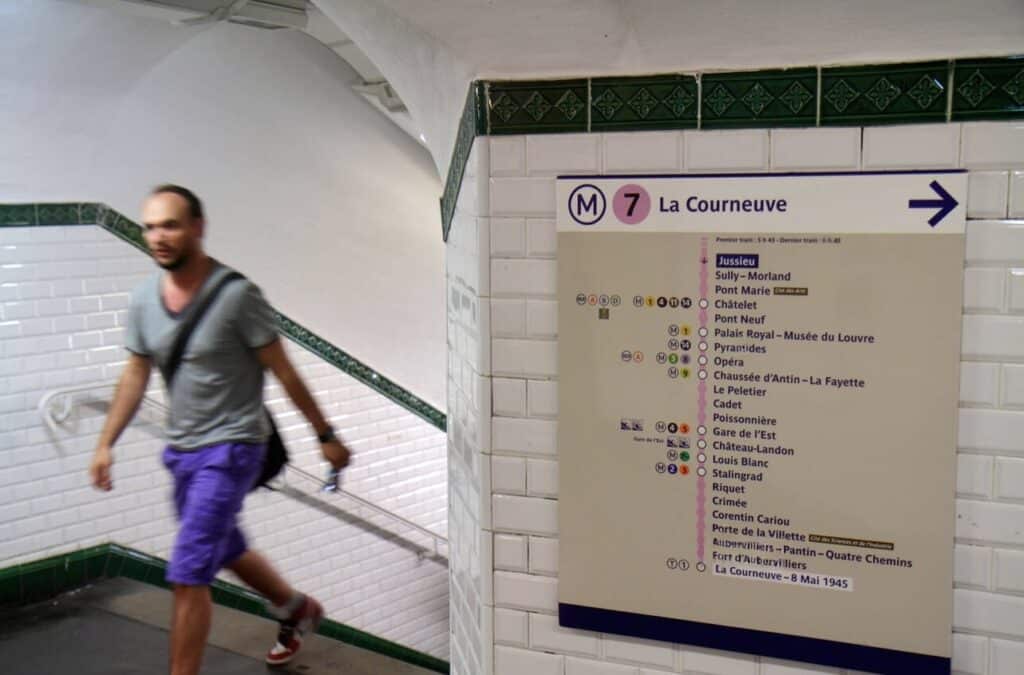
One thing Paris does brilliantly? Metro signage. Once you understand a few cues, the whole system clicks.
- 🎯 Follow colors + numbers first. Every metro line has:
- A number (1–14 + 3bis, 7bis)
- A color (yellow for Line 1, purple for Line 4, etc.)
Platforms and direction signs always use both.
- ➡️ Direction = final stop: Paris doesn’t use “northbound” or “toward the river.” Instead, you follow the terminus station.
- Example: Going from Arc de Triomphe → Louvre on Line 1 → follow “Château de Vincennes”.
- 🔄 Look for “Correspondance” signs. These mean transfers. They’re always clearly labeled with:
- The line number
- The line color
- Arrows showing which hallway to follow
- Some transfers are short (like at Concorde). Some feel like a scenic underground hike (hello, Châtelet).
Local Tip: At big stations, don’t overthink it, follow the colored circles.
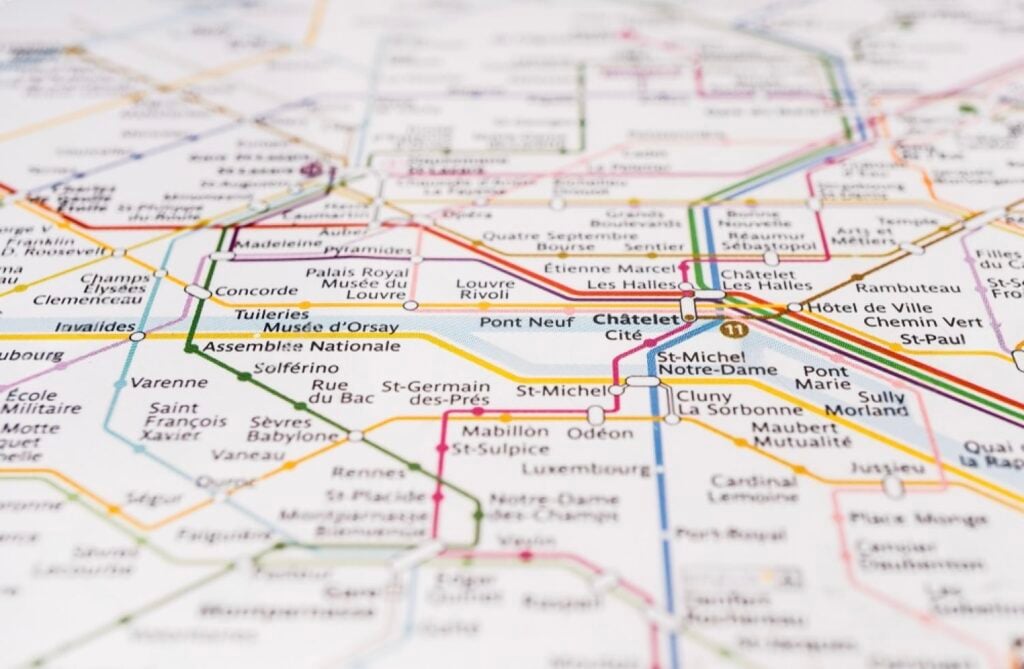
- 🗺️ Use the mini-maps inside the train. Above every door is a full line map showing:
- All upcoming stops
- Transfer points
- Which direction you’re heading
Best Metro Apps & How to Use Them
Parisians rely on apps almost daily, not because the system is confusing, but because real-time info is priceless. Here are the ones worth downloading:
📲 Citymapper (best all-around)
- Easiest for planning routes
- Real-time train arrivals
- Tells you which carriage to board for fastest exits
- Great alternative routes if there’s a delay
This is my go-to when I’m in a hurry.
📲 Bonjour RATP (official app)
- Live train + bus information
- Line alerts
- Station maps
Perfect for checking how trains are running right now.
📲 Île-de-France Mobilités (IDFM)
- Lets you buy digital tickets
- Load tickets and passes to your phone
- Check validity at any time
If you want to use your phone as your metro ticket, download this one.
Local Tip: Screenshot your directions before going underground — many stations have spotty mobile service.
Boarding Strategy, Where to Stand & Door Etiquette
Yes, there is a strategy to getting on the metro smoothly, and locals practice it without even thinking. Here’s the insider playbook.
- 🚪 Step aside for exiting passengers: This is Paris Rule #1. Stand to the side of the doors, let everyone off first, and board quickly after.
- 📏 Spread out on the platform: The first two train cars and the last two are often less crowded. If the platform looks packed, walk 10–15 meters down, it makes a big difference.
- 📍 Smart boarding positions: Apps like Citymapper show where to stand to minimize transfer walking, exit closest to your street, avoid bottlenecks. Once you try it, you’ll never go back.
- 🎒 Backpack etiquette: On busy lines take your backpack off your shoulders and hold it in front of you like locals do. This frees up space and keeps pickpockets away from your things.
- 📶 Don’t block the doors: The area by the doors is high-traffic. If you’re not getting off soon, move deeper into the carriage.
- 😎 Walk with purpose: Even if you’re unsure, choose a direction and walk confidently. Parisians will happily help you after you’ve cleared the middle of the hallway.
Local Tip: If a platform has a huge crowd waiting, look for markings on the floor — some stations show where doors actually open so you can line up in the right spot.
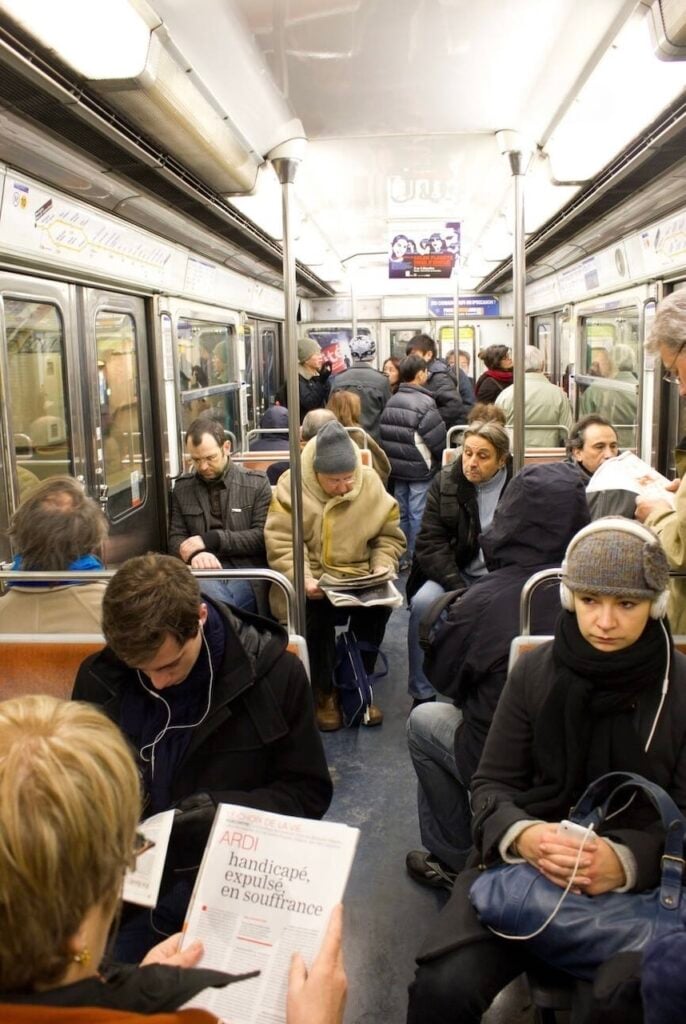
Safety, Pickpockets & Phone Use
The Paris Metro is safe, efficient, and used by millions of people every day. But like any big-city transit system, it has its quirks. The biggest one? Petty theft, especially around the most touristy stops.
The good news is that Parisians deal with this daily, and the tricks they use are simple, subtle, and incredibly effective. Here’s everything you need to feel confident and comfortable underground.
How Locals Protect Their Stuff (and Their Phones)
- 📱 Keep your phone zipped away near train doors: The #1 place phones get stolen is right by the doors, especially when the train is about to close. Thieves slip an arm in, grab the phone, and jump out just as the doors beep.
- Local move: When standing near the doors, keep your phone in a zipped jacket pocket, a crossbody bag, or in front pants pocket. If you want to check directions, step away from the doors first.
- 🎒 Wear your backpack in front of you on crowded lines: This is something everyone does in Paris — locals included.
- Why? Because crowded lines (1, 4, 9, and certain parts of 13) get tight, and backpacks are easy to unzip without you noticing.
- Local move: Slide your backpack onto your chest during rush hour and busy sightseeing times. It feels a little awkward the first time, but I promise — you’ll instantly blend in with the morning commuters.
- 👜 Crossbody bags = your best friend: This is the go-to setup for most Parisians on the metro. Wear it across your body, in front, with the zipper toward your chest.
- Local move: Rest your hand casually on the top of the bag. Not clutching it, just lightly touching it. It signals “don’t bother.”
- If you’re scrolling TikTok or checking Instagram while standing near the aisle, you’re an easy target.
- Safer options:
- Sit and use your phone
- Stand inside the carriage, away from the doors
- Hold your phone with both hands
- Safer options:
- 👀 Stay alert at crowded tourist stations: Pickpockets go where tourists go. The most “active” stations tend to be:
- Champs-Élysées / Charles de Gaulle-Étoile (Line 1)
- Châtelet–Les Halles (multiple lines)
- Gare du Nord (RER + Metro)
- Barbès-Rochechouart (Line 4/2)
- Saint-Michel–Notre-Dame (RER B/C)
- 🧍♂️ Stand with a purpose: This is one of those tiny, subtle local tricks. Pickpockets look for people who seem unsure, distracted, or overloaded.
- ✨ Bonus: The “metro stare” you’ll see locals use: When someone sketchy gets too close, Parisians give a quick, calm, slightly unimpressed look. Not hostile — just “I see you.” It works surprisingly well.
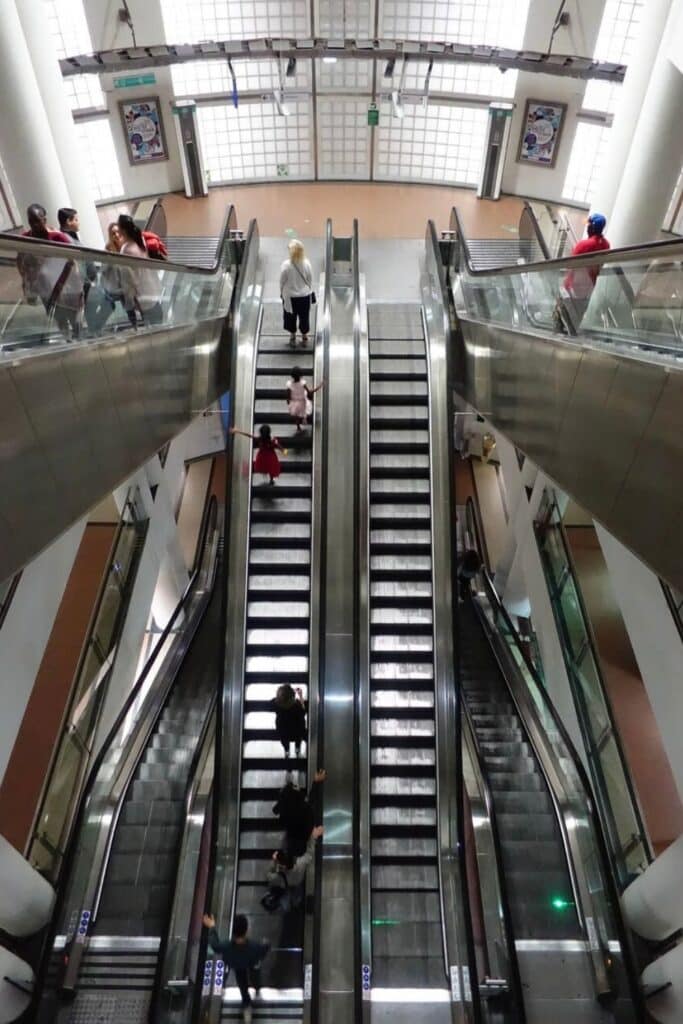
Accessibility, Luggage & Strollers
Let’s be honest: the Paris Metro is iconic… but it’s also old. Many stations were built long before accessibility standards existed, which means stairs, narrow corridors, and the occasional surprise spiral staircase (looking at you, Abbesses).

Step-Free Options (Line 14 & Key RER Stations)
Most metro lines still don’t offer full accessibility, but the RER network and the newest metro line, Line 14, are your best friends for smooth, step-free travel.
🚆 Line 14: The Dream Line
Line 14 is the Paris Metro’s sleek, fully modern, fully accessible superstar. If there’s one line you want to stick close to with mobility needs or luggage, this is it.
Why travelers love Line 14:
- Every station is designed for step-free access
- Stations have elevators and wider accessible gates
- The line is fully automated
- Trains are modern and frequent
- It connects major transportation hubs including Saint-Lazare, Châtelet, Gare de Lyon, and Saint-Denis Pleyel
- It provides direct Metro service between central Paris and Orly Airport
Elevators can occasionally be unavailable because of maintenance or technical problems. Travelers who require step-free access should check elevator status in the official transportation app before leaving.
🚉 RER Lines: Your Best Bet for Elevators
The RER (A, B, C, D, E) is Paris’s regional train network, and its major stations are far more accessible than most metro stops.
Several major RER stations provide step-free routes, although elevator availability and accessible pathways can vary:
- Châtelet–Les Halles
- Gare de Lyon
- Gare du Nord (partial but improving)
- Charles de Gaulle (CDG) Airport
- Orly Airport via the accessible Metro Line 14 station
Local Tip: If you’re traveling with a stroller or suitcase, it’s often easier to combine a short bus ride + RER instead of relying only on the metro. Paris buses are almost entirely accessible and a relaxing break from stairs.
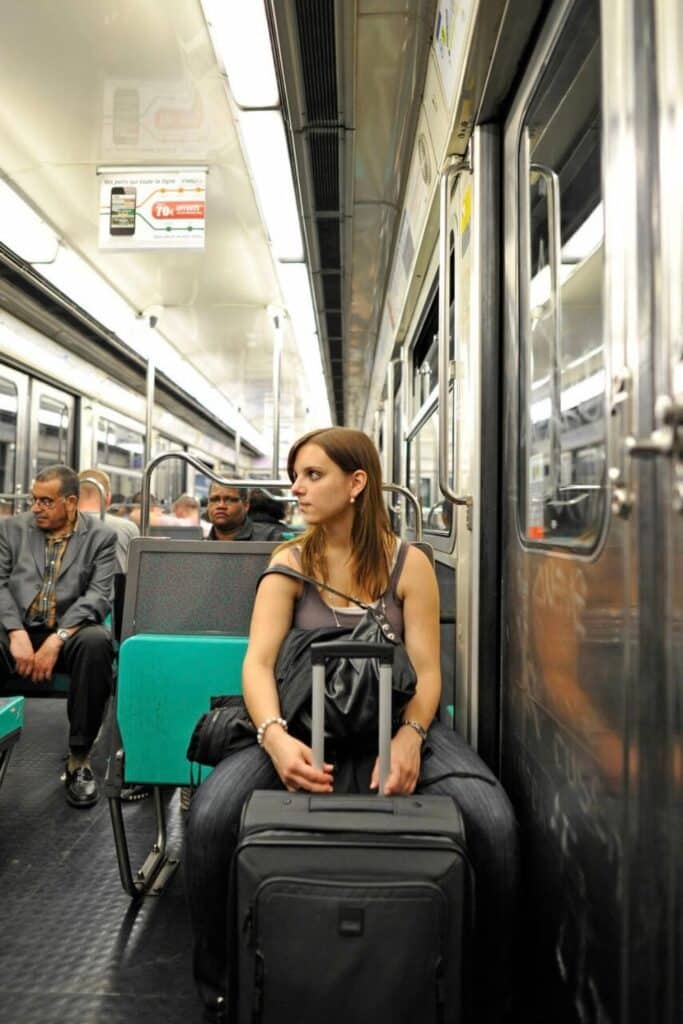
Luggage + Metro Reality Check
Some metro stations are absolutely fine with luggage. Others… not so much.
Stations notorious for endless stairs:
- Abbesses (Line 12) – 144 steps up a spiral staircase
- Cité (Line 4)
- Concorde (Line 12)
- Ledru-Rollin (Line 8)
Traveling With Heavy Luggage?
If you’re arriving at CDG or Orly with large suitcases, young children, or mobility concerns, taking public transportation isn’t always the easiest option. A prebooked airport transfer can take you directly from the airport to your hotel without navigating Metro stairs, transfers, or crowded trains.
Compare Paris airport transfer options →
Scenic & Unique Metro Rides
Okay…. accessibility aside, some metro rides in Paris are experiences in themselves. If you want a little magic with your public transport, here are the lines and stations worth going out of your way for.
🌉 Line 6: Eiffel Tower Views for Days
Line 6 runs partly above ground, especially between Passy ↔ Bir-Hakeim, offering one of the best surprise views in Paris. Look left as the train crosses the Seine and the Eiffel Tower fills the entire window. Locals still smile when it happens, it never gets old.
Planning to visit the tower afterward? Read my Eiffel Tower guide before you go.
Local Tip: When traveling from Passy toward Bir-Hakeim and Nation, look to the left as the train crosses the Seine. When traveling in the opposite direction toward Charles de Gaulle–Étoile, look to the right.

🎡 Abbesses (Line 12): The Deepest + Most Charming Station
Abbesses is iconic — but it comes with a warning. It’s the deepest station in Paris, accessed by either A famously long spiral staircase, or a slow, crowded elevator.
But once you exit, you’re greeted by:
- A gorgeous Art Nouveau entrance
- The heart of Montmartre just steps away
- A postcard-perfect square that feels like old Paris
Local Tip: Take the elevator up, and the stairs down, it’s easier on the legs and avoids the claustrophobic elevator queues.
🌿 Art Nouveau Entrances (Guimard Designs)
Paris has some of the most beautiful metro entrances in the world, designed by Hector Guimard in the early 1900s. These are worth a photo stop:
- Abbesses
- Porte Dauphine
- Châtelet (Place Sainte-Opportune)
- Réaumur–Sébastopol
- Cité
These elegant, green iron structures look like they came straight out of a Parisian fairy tale.
Local Tip: The entrance at Porte Dauphine is one of the few entirely original ones left, it’s stunning in the golden hour.

Landmarks & Nearest Stations
- 🗼 Eiffel Tower: Bir-Hakeim (L6), Trocadéro (L9)
- 🎨 Louvre: Palais Royal–Musée du Louvre (L1/7)
- ⛪ Notre-Dame: Cité (L4), Saint-Michel–Notre-Dame (RER B/C)
- 🇫🇷 Arc de Triomphe: Charles de Gaulle–Étoile (L1/2/6)
- 🎡 Sacré-Cœur: Abbesses (L12), Anvers (L2)
- 🚆 Versailles: Versailles-Château Rive Gauche (RER C)
- 🏰 Disneyland Paris: Marne-la-Vallée–Chessy (RER A)
Paris Transportation Zones and Airport Tickets
- 🎟️ Metro–Train–RER Ticket: €2.55 for eligible journeys throughout Île-de-France
- 🏰 Versailles: €2.55 each way on an eligible RER or train route
- 🎡 Disneyland Paris: €2.55 each way on RER A
- ✈️ Charles de Gaulle Airport: €14 each way using RER B
- ✈️ Orly Airport: €14 each way using Metro Line 14
- 🟣 Navigo Weekly Pass: The all-zones pass covers eligible travel to both airports
- 🚌 Noctilien buses: Operate overnight after the Metro closes
Maps & Useful Links
- 🗺️ Metro Map: Download PDF
- 🚆 RER Map: Download PDF
- 🚌 Bus & Tram: Download PDF
- 📱 Bonjour RATP App: live routes & alerts
- 📱 IDFM App: buy & store digital tickets
- 💡 Pro Tip: screenshot maps for offline use
Quick Ticket Picks
- 💳 Best for a few journeys: Navigo Easy card or phone with individual tickets
- 📅 Best for five or more rides in one day: €12.30 Navigo Day Pass
- 🟣 Best for a Monday-to-Sunday visit: €32.40 Navigo Weekly Pass
- ✈️ Airport travel without a pass: €14 Paris Region Airports Ticket
- 🚇 Most scenic Metro ride: Line 6 for Eiffel Tower views
Paris Metro FAQ (2026 Edition)
Final Thoughts
Now that you know the basics of how to use the Metro in Paris, I hope it feels way less intimidating than it did for me in 2021. Once you get the hang of the layout and a few local habits, it becomes second nature. Save the cheat sheet, check the official apps for live service information, and you’ll be ready to ride.






We used your metro advice on our trip from Boston last year and it made getting around Paris so easy. Honestly, it was quicker than the trains back home.
So happy the metro tips helped! Paris definitely feels quicker than Brisbane’s trains. Did you discover any favorite stops while you were here?
This is a great Paris guide. I actually tried Paris metro last 2017. There’s a lot of updates. Thanks for sharing it.
The Metro has definitely changed since 2017, so I’m glad the updated tips were helpful.
My son is stationed in Europe, and he took a trip to Paris. He said you absolutely HAVE to use public transport if you want to get anywhere.
Exactly! The metro is a must in Paris. It saves so much time getting around the city.
I haven’t visited Paris yet, so guides like yours feel really grounding. Just from the title, it sounds like the kind of post that clears up the little things people stress about, like which tickets to buy or how to find the right platform without rushing. I always appreciate when someone breaks down a transit system in a calm, practical way.
Thank you! I’m glad the guide helps simplify things — the Metro feels tricky at first but becomes surprisingly easy.
This is a great post for someone like me whose yet to visit Paris but plans to on a girls trip. I do get anxious when I travel so this is helpful as I find knowing what I need to do/consider calming. I’ve also noted a few places to visit/see Porte Dauphine.
Thanks so much for reading! The Metro can feel overwhelming at first, but once you ride it, it really does make Paris easier to explore. A girls trip sounds so fun…and yes, Porte Dauphine is such a pretty stop! Let me know if you have any questions as you plan.
Is it normal for trains to be super crowded on weekends? We rode Line 1 to the Louvre and it was packed. Any better alternatives?
Yes, that’s pretty normal. Line 1 is always slammed on weekends, especially around the Louvre. If it fits your route, Line 7 or 14 is usually a little calmer. Hope your next ride feels easier!